
 NEWS
NEWSDaniil Goldman: How to Create a Bar People Remember

Sept. 16 2026, Published 1:28 a.m. ET


Hospitality entrepreneur Daniil Goldman has spent more than a decade developing distinctive bar concepts, including Moscow’s Mitzva Bar and The Bix and, more recently, the New York–based mobile cocktail project Eclectic. His work combines concept development with the operational decisions required to make an unusual venue commercially sustainable.
Goldman’s career illustrates a recurring challenge in hospitality: an original concept attracts attention, but disciplined execution determines whether the venue survives.
“Restaurants, and bars especially, are deeply emotional businesses,” Goldman says. For him, their appeal has always gone far beyond food and drinks. It is the ability to create a place where strangers meet, friends celebrate, couples fall in love, and an ordinary evening can suddenly turn into a memory.
That emotional element has defined much of Goldman’s professional life. But getting there was hardly a straight road.
From Corporate Life to Creating His Own World
Goldman did not originally plan to become a restaurateur.
Educated in marketing, with a master’s degree in the field, he began his career in marketing and public relations and spent time working within a large corporation.
Very quickly, however, he realized that the conventional corporate path was unlikely to satisfy him.
He wanted independence. More importantly, he wanted to create.
“I wanted to bring my own ideas to life and, if you will, to express myself creatively,” he recalls.
Hospitality offered that opportunity, but it also required him to learn finance, staffing, service, procurement, marketing, and concept development through direct operating experience.
At first, Goldman admits, the business seemed more accessible than it really was. Unlike medicine, engineering, or law, opening a bar does not necessarily require years of specialized education. Someone with no professional background in hospitality can potentially create one successful venue.
But Goldman would later discover that building one successful bar and becoming a genuine hospitality professional are two very different things.
Experience, judgment, capital, leadership, intuition, and the ability to recover from failure all become essential.
Goldman learned those lessons through several early projects that did not succeed.

Three Failures—and One Last Attempt
By age 24, Goldman had already participated in three hospitality projects that failed to produce a sustainable business.
The experience affected him deeply.
He could have returned to a more conventional career. Instead, he gave himself what he considered one final opportunity in the industry.
And rather than choosing something safe, he decided to create his boldest concept yet.
Mitzva Bar was a Jewish cocktail bar in central Moscow—an unusual idea even in a market already filled with restaurants and nightlife concepts.
Goldman knew it was risky.

Looking back today, he admits he is not certain he would make exactly the same gamble again.
But Mitzva became one of the defining projects of his career.
Not immediately, however.
During its first year, the bar struggled commercially.
For an entrepreneur already coming out of several unsuccessful projects, the obvious choice might have been to close it.
Goldman refused.
Goldman believed the underlying concept retained value despite the initial losses. Favorable critical attention and the response of returning guests reinforced his decision to keep refining the venue rather than abandon its identity.
So instead of abandoning the project, Goldman changed the business.
He stopped serving straight spirits and, for approximately a year and a half, offered cocktails only. The change clarified Mitzva’s positioning as a cocktail bar rather than a restaurant with an ancillary drinks program.
He changed the seating, replacing low tables and chairs with higher seating and altering both capacity and the social dynamics of the room.
He also revised the venue’s marketing and audience positioning so that its public image more clearly reflected the cocktail-focused concept.
Approximately a year and a half after opening, the revised model gained traction and the bar became commercially viable.
Mitzva became one of Goldman’s defining projects. Its turnaround demonstrated his ability to revise an unconventional concept in response to operating experience without abandoning its distinctive identity.
Today, he still calls it one of his most personal projects.
Why the Best Bars Have a Personality
Across his projects, Goldman has treated concept identity as an operating decision rather than a decorative theme.
“I do not want to open places that simply function operationally,” he says. “I want to create projects with character.”
That belief can be seen across his portfolio.
Mitzva established the cultural-concept approach that became a recognizable feature of his subsequent work.
The Bix, his jazz bar in central Moscow, became one of his most visible marketing and commercial successes and received multiple industry awards and recognitions.
Zionist was designed for a younger audience and launched through an unusual multi-investor model that brought a group of partners into the project from its early stages.
What is particularly striking is that Goldman did not simply copy one successful formula.
Each venue developed a different personality.
That, he believes, is one of the most difficult skills in hospitality: understanding not only how to operate a business, but how to give it an identity compelling enough for people to care about it.
The projects differ in audience, programming, and design, but share a consistent method: define a specific cultural or entertainment proposition, translate it into operational choices, and revise those choices against actual guest behavior and financial results.
Culture Without the Cliché
Mitzva was especially important because it allowed Goldman to explore his Jewish identity through hospitality.
But from the beginning, he wanted to avoid an obvious trap: reducing culture to decoration.
For Goldman, Jewish identity in Mitzva was not meant to be represented by a few visual symbols or references added for marketing effect.
It informed the atmosphere, menu, cocktails, storytelling, design, and style of hospitality.
“I am proud of my Jewish identity, and I am grateful to be able to share it with guests through the places I create,” he says.
Goldman argues that founder-led concepts can maintain a closer connection between cultural narrative and guest experience than standardized formats, although their execution depends heavily on the founder’s continued operational involvement.
Want OK! each day? Sign up here!
New York, New Rules
Today, Goldman is beginning a new chapter in New York.
New York presents a demanding market in which high fixed costs and intense competition place unusual pressure on new hospitality concepts.
New York is one of the world's most sophisticated restaurant and bar markets. Almost every concept seems to already exist. Customers have endless options, while operators face high costs and fierce competition.
Goldman nevertheless sees opportunity.
His years in hospitality have also made him more pragmatic than he was at 24.
Earlier in his career, he often began with intuition.
Now, his first questions are different.
What resources are available? What is the path toward profitability? Can an idea be tested before enormous capital is committed? Is the business operationally sustainable?
The difference is that Goldman now tests creative ideas against capital requirements, operating sustainability, and a defined path to profitability.
“I no longer treat intuition as a substitute for discipline, research, or sound economics,” Goldman says.
That approach is visible in Eclectic Mobile Cocktail Bar, a current New York project that allows the concept to be tested without the fixed costs of a permanent venue.
A Bar That Comes to You
Created with street photographer and mixologist Misha Tkachevsky, Eclectic applies Goldman’s concept-development method to a mobile event-bar format.
Instead of simply supplying bartenders, alcohol, and glasses, the founders have created an entire traveling visual and hospitality concept.
The project combines a custom bar, vintage furniture and glassware, an original cocktail menu, and a coordinated visual identity.
The idea is for Eclectic to become part of the visual language of an event rather than disappearing into the background as a conventional catering service.
The format is intended for private, cultural, and corporate events.
For Goldman, the model is also a controlled way to enter the New York market.
It allows him to build relationships, test demand, develop a clientele, and understand the city before committing to the enormous fixed costs associated with a permanent venue.
And perhaps even more importantly, Eclectic brings Goldman back into direct contact with guests.
“For the first time in a long time, it gives me the opportunity to be personally present with guests,” he says, “to bring my own charisma and sense of hospitality directly into the service.”
Hospitality Is Becoming Entertainment
Goldman believes the entire idea of a bar is now changing.
Younger customers are drinking differently.
Many are consuming less alcohol, choosing one or two high-quality drinks rather than making alcohol the center of an evening. Others increasingly choose low-alcohol or alcohol-free options.
For Goldman, this does not mean the death of bar culture.
It means bars need to offer more.
A successful modern venue cannot rely on a beautiful glass of whiskey or an elaborate cocktail alone.
It needs atmosphere, food, design, music, service, community, and—most importantly—a reason to be there.
In Goldman’s assessment, restaurants and bars increasingly compete as entertainment and lifestyle businesses, not solely as places to purchase food and drinks.
People are buying an experience.
Goldman thinks that shift will reward entrepreneurs who understand something hospitality has always fundamentally been about: human emotion.
Why Cocktails May Become Simpler
There is another interesting contradiction in Goldman's vision of the future.
He expects cocktails to become simultaneously more sophisticated and simpler.
Behind the scenes, bartenders will work with increasingly advanced techniques: batching, fermentation, clarified juices, house-made ingredients, precise preparation systems, and more sophisticated alcohol-free alternatives.
Guests, however, may see less of that complexity.
Goldman believes people increasingly want a drink that is delicious, clear, fast, and easy to understand—not a lecture.
“Complexity should stay with the professionals,” he says.
The best hospitality, in other words, may require enormous effort while appearing completely effortless.
The New Generation Wants to Belong
Goldman is particularly interested in how Gen Z is reshaping nightlife.
Younger guests, he observes, often place less emphasis on formal service or technical cocktail knowledge and more emphasis on authenticity, affordability, visual identity, and a sense of community.
They still care about quality.
They simply define quality more broadly.
The question is no longer only: How good is the drink?
It is also: Do I feel comfortable here? Is this place for me? Does it have an identity? Is it worth the money? Do I want to bring my friends?
That shift may create opportunities for founder-led venues capable of developing a clearly defined community and identity.
A large hospitality group can offer powerful systems and resources.
But a smaller founder-led venue can sometimes offer something harder to manufacture: intimacy.
“A single independent venue does not need to become a chain to succeed,” Goldman says. “It needs to become indispensable to a particular audience.”
The New York Dream
Eclectic is the first operating component of Goldman’s broader plans in the United States. The other concepts discussed below remain in development and should not be presented as completed achievements.
Alongside partner Artem Baybuz, he developed Vinegret, a series of Russian-language events in Manhattan intended to bring together members of New York’s Russian-speaking community.
At the same time, Goldman is thinking about permanent venues.
One is Esther, envisioned as a spiritual successor to Mitzva and another exploration of Jewish bar culture.
The name has a particularly personal meaning: Esther is Goldman’s daughter.
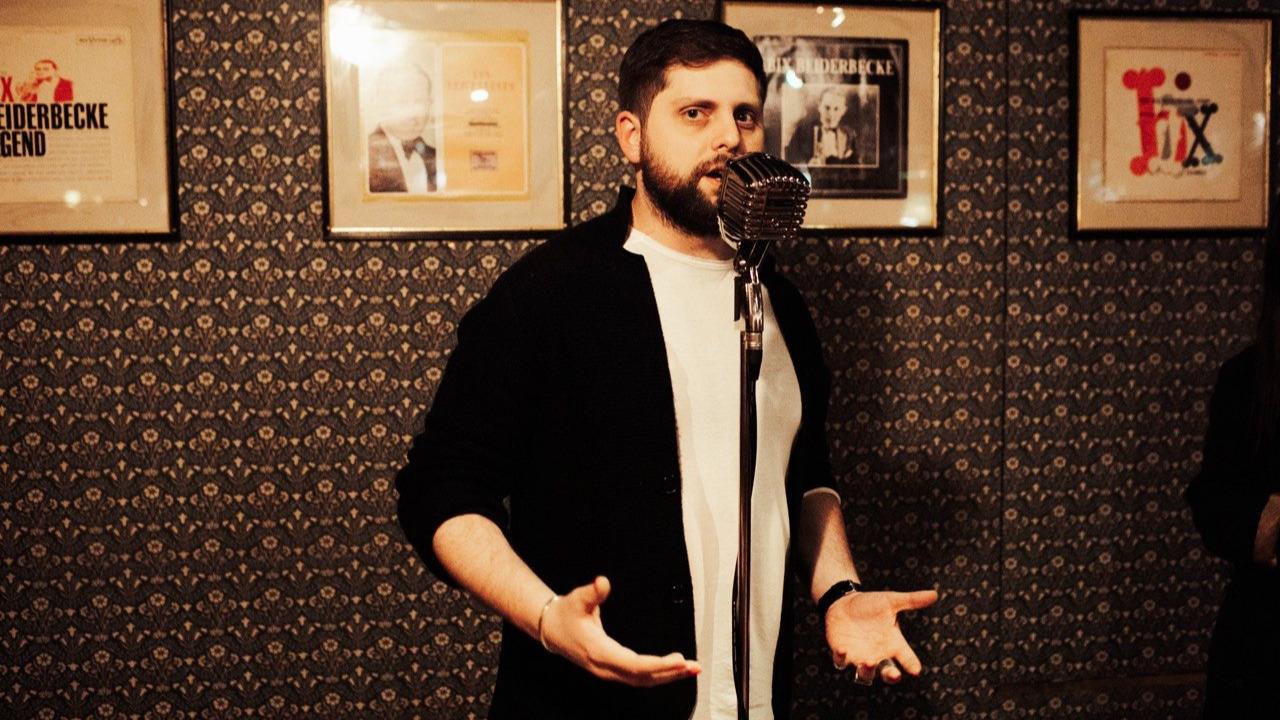
Another proposed project is Fats, which Goldman is developing with jazz musician Konstantin Gevondyan.
Inspired in part by the sensibility he developed through The Bix, the concept is being designed specifically for New York, with the long-term ambition of becoming a distinctive addition to the city's jazz-bar scene.
The project would enter a mature New York jazz market and is therefore still best described as a proposed continuation of Goldman’s prior work with The Bix.
Learning How to Fail
For all his successes, Goldman speaks openly about the less glamorous side of entrepreneurship.
Not every project has worked.
The past several years, he says, have not always been financially easy.
Today he also has responsibilities he did not have at 24, including a family he describes as deeply important to him.
Risk feels different now.
But he does not believe entrepreneurship can exist without failure.
The difference between an entrepreneur who grows and one who simply repeats mistakes is the ability to understand what went wrong.
Was it the location?
The concept?
The timing?
The economics?
The team?
The execution?
“You need to be able to analyze what failed,” Goldman says, “and use that knowledge in the next project.”
His career is not a record of uninterrupted success.
It is a record of repeatedly analyzing weak performance, revising the concept or operating system, and applying those lessons to the next project.
Creating Places That Make a City More Interesting
Ask Goldman what separates an exceptional hospitality professional from everyone else, and his answer begins with expertise: understanding the process, paying attention to detail, and accepting responsibility for risk.
But expertise alone is not enough.
There must also be passion and intuition.
For Goldman, the highest form of hospitality is not simply running a profitable business.
It is creating something that adds to the life of a city.
A great bar can introduce people to one another. It can become part of a neighborhood. It can give someone a first date, a birthday memory, a favorite song, a ritual, or simply a reason to leave the house on a Tuesday night.
Mitzva and The Bix provide the clearest examples of that approach: each translated a distinct cultural or musical idea into a recognizable hospitality experience.
He is now attempting to apply the same method in New York through Eclectic and the proposed Esther and Fats concepts.
After more than a decade of operating experience, his definition of achievement has become more concrete.
A good business survives.
A great hospitality project makes people feel something.
And the truly memorable ones become part of the city itself.