
 NEWS
NEWSHow European Windows Are Quietly Transforming American Homes - And Cutting Energy Bills


Oct. 2 2026, Published 2:21 a.m. ET


Last winter, a homeowner in suburban New Jersey replaced eight windows in her 1960s Colonial with triple-glazed tilt and turn units from Europe. By February, her monthly gas bill had dropped by $160. She hadn't touched the thermostat.
That kind of result isn't a fluke. Across the Northeast, Midwest, and Mountain West, homeowners are bypassing the standard double-hung window for European-designed alternatives that have been the default in Germany, Poland, and Scandinavia for three decades. The performance gap between the two approaches - and what it means for your energy bill - is what this guide lays out.
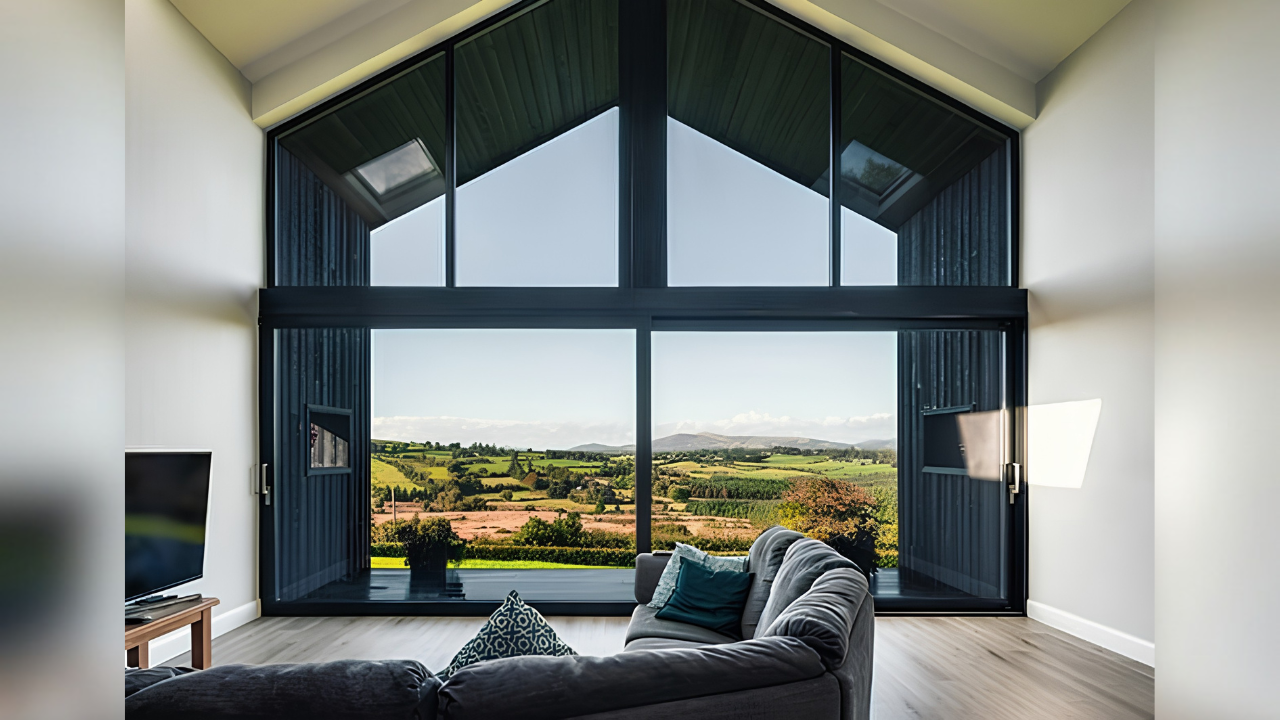

What Is a Tilt and Turn Window - and Why Are American Homeowners Switching?
A tilt and turn window does something no standard American window does: it opens two different ways from the same frame. Tilt the top inward a few inches for ventilation. Swing the entire sash fully inward - like a door - for cleaning or full airflow. One handle, two moves.
The more important difference is the seal. A standard double-hung relies on a single-point latch and a compression track. A tilt and turn locks at multiple points around its entire perimeter when closed. Feel along the edge of a well-sealed European window in January and you'll notice: no gap, no draft, no whistle at the corners.
Two Moves, One Frame
Tilting the top of the sash inward lets fresh air in without exposing the opening to rain or insects - practical year-round, especially in a bedroom at night. Rotating the handle further swings the entire sash inward for maximum airflow or cleaning access from inside. No ladders, no exterior access needed.
The frame is a different product category from standard American vinyl. European windows use steel-reinforced uPVC - a multi-chamber profile that traps still air as insulation - or aluminum with a thermal break through the center. The structural difference shows up directly in the performance numbers.
| Feature | Tilt and Turn (European) | Double-Hung (Standard U.S.) |
|---|---|---|
| Opening modes | 2 (tilt inward + full turn) | 1 (vertical slide) |
| Airtight seal | Multi-point locking, perimeter gasket | Single-point latch, compression gap |
| Frame construction | Steel-reinforced uPVC or aluminum with thermal break | Standard vinyl or aluminum (single-chamber) |
| Standard glazing | Triple-pane | Double-pane |
| Typical U-Factor | 0.14–0.26 BTU/hr·ft²·°F | 0.25–0.35 BTU/hr·ft²·°F |
| Cleaning access | From inside (both panes) | Requires exterior access |
Do European Windows Actually Cut Energy Bills - and By How Much?
Triple-glazed European windows start at U-Factors of 0.14 BTU/hr·ft²·°F - well below the 0.25–0.35 range typical of double-pane windows at the home improvement store. The Department of Energy estimates that replacing old or inefficient windows can cut household heating and cooling costs by 10 to 25 percent. How much you save depends on what you're replacing.
Swapping single-pane windows from the 1970s delivers the largest return. Replacing already-decent double-pane units still moves the needle - but expect the lower end of that DOE range.
The U-Factor Gap
U-Factor measures how quickly a window loses heat. Lower is better. Most double-pane windows carry U-Factors of 0.25 to 0.35. European triple-glazed windows get there differently.
Three panes of glass create two sealed air chambers between them. Those chambers are filled with argon gas - denser than air and a slower conductor of heat. Add a Low-E coating on one or more panes to reflect infrared radiation, and the result is a window that holds warmth the way a well-insulated wall does. The frame matters just as much: a seven-chamber uPVC profile with steel reinforcement traps additional still air inside the frame and eliminates the flex that gradually opens gaps in cheaper vinyl.
OKNOPLAST's PAVA system, for example, carries a certified U-Factor range starting at 0.14 BTU/hr·ft²·°F - tested through Keystone Certifications USA - meeting the technical U-Factor threshold for ENERGY STAR Most Efficient status in the Northern zone, pending EPA certification. The seven-chamber frame and steel-reinforced sash hold that performance through decades of thermal cycling without warping or settling.
| Metric | European Triple-Glazed | U.S. Standard Double-Pane |
|---|---|---|
| Typical U-Factor | 0.14–0.26 BTU/hr·ft²·°F | 0.25–0.35 BTU/hr·ft²·°F |
| Frame chambers | 7-chamber uPVC | 2–3 chamber vinyl |
| Frame reinforcement | Steel-reinforced | Standard (none) |
| Gas fill | Argon | Argon (standard) or air |
| Air leakage | 0.10 CFM/ft² at 75 Pa / 1.57 psf | 0.20–0.30 CFM/ft² |
| Est. annual heating savings (Northern zone, vs. single-pane) | Up to 25% | Baseline |
| Standard warranty | 10 years | 2–5 years |
What U-Factor Does Your Climate Zone Actually Require?
ENERGY STAR Version 7.0 - in effect as of January 2025 - tightened requirements across all four U.S. climate zones. Northern zone homeowners (Minnesota, Maine, Vermont, upstate New York) need windows at 0.22 or below. North-Central zone (New Jersey, Pennsylvania, Illinois, Massachusetts) is 0.25. Most European triple-glazed systems meet both thresholds as standard, not as an upgrade.
If you're near a zone boundary - a homeowner in southern Pennsylvania sitting on the North-Central/South-Central line, for instance - check your ZIP code against the ENERGY STAR zone lookup before buying. The SHGC requirement (Solar Heat Gain Coefficient) differs by zone: cold climates require a minimum to let solar heat in; warm climates cap it to keep solar heat out.
Want OK! each day? Sign up here!
| Zone | Max U-Factor | SHGC Requirement | Example States |
|---|---|---|---|
| Northern | 0.22 | Min. 0.17 (solar gain required) | MN, WI, ME, VT, upstate NY |
| North-Central | 0.25 | None | PA, NJ, OH, IL, MA, CO |
| South-Central | 0.30 | Max. 0.25 (solar gain limited) | NC, TN, VA, northern TX |
| Southern | 0.32 | Max. 0.25 (solar gain limited) | FL, AZ, southern TX, HI |
Source: ENERGY STAR Version 7.0, effective January 2025
What Does the Investment Cost - and When Does It Pay Back?
Through the end of 2025, the federal Energy Efficient Home Improvement Credit (§25C) covered up to $600 per window - with a $1,200 annual household cap - for NFRC-certified windows meeting the required U-Factor and SHGC thresholds for their climate zone. That credit expired for products placed in service after December 31, 2025. If you installed qualifying windows before that date, consult a tax advisor about retroactive eligibility on IRS Form 5695.
For 2026 and beyond, the payback math rests on energy savings and home value alone. In cold-climate markets, it still holds up.
The Numbers Without the Credit
At current energy prices, most homeowners replacing single-pane windows in the Northern or North-Central zone see heating and cooling bill reductions of $500 to $1,500 per year across a full house. Installed cost for European triple-glazed replacements runs $1,200 to $1,800 per window, labor included.
| Scenario | Typical Installed Cost | Est. Annual Savings | Est. Payback |
|---|---|---|---|
| 1 window (Northern zone, vs. single-pane) | $1,200–$1,800 | $100–$250 | 6–12 years |
| 10 windows (full house) | $12,000–$18,000 | $500–$1,500 | 8–15 years |
Savings based on DOE data for replacing single-pane windows in Northern climate zone at current average residential energy prices.
Payback timelines lengthen as the windows you're replacing get newer. Swapping 1980s single-pane wood windows puts you at the fast end of that range. Replacing 2010 double-pane vinyl units with decent seals puts you closer to the slow end.
Beyond the Energy Bill: What Else Changes When You Upgrade
Three other changes tend to surprise homeowners who've only ever lived with standard American windows.
Noise Goes Down Noticeably
Sound Transmission Class (STC) measures how much noise a window blocks. Standard double-pane windows typically achieve STC 28–32. OKNOPLAST's PAVA system, with triple glazing and a multi-point perimeter seal that closes gap leakage at the frame, is rated STC 40. That's not soundproofing - but for a home four blocks from the highway, near a commuter rail line, or under a flight path, the difference registers immediately. Most homeowners notice it first at night.
They Come in Colors You'd Actually Want
European windows haven't been white-only for a long time. OKNOPLAST carries more than 50 color options - wood-look laminates on the interior face, matte anthracite exteriors for contemporary facades, custom finishes matched to an existing palette. Custom shapes are available too: arched, round, trapezoidal, geometric. For older homes where standard rectangular units won't fit without altering the architecture, that flexibility changes what's possible.
Home Value Gets a Bump
NAHB research puts the perceived home value increase at 7 to 11 percent for quality window replacements. On a $450,000 home, that's a $31,500 to $49,500 lift in buyer perception - in most cold-climate markets, more than the net cost of a full-house replacement. The return is strongest when all windows are replaced at once and when comparable homes nearby still carry original or aging windows. Either way, updated windows give a home a clear differentiator in the first sixty seconds of a showing.
Are European Windows Available Near You - and How Does the Process Work?
European tilt and turn windows are available through U.S. dealer networks in at least 10 states, with lead times of 8 to 10 weeks from order to installation. That timeline is worth understanding before you start.
A certified installer measures every rough opening to the millimeter and submits the specs to the manufacturer. Each unit is built to those exact dimensions - there's no warehouse of pre-cut windows waiting to ship. Manufacturing takes 4 to 5 weeks. Transatlantic shipping adds another 4 to 5 weeks. The windows arrive built for your home, and a full house installation typically takes one to two days. Compared to a kitchen renovation or a roof replacement, the process is predictable from week one.
OKNOPLAST - a European window manufacturer founded in 1994, with production in Poland and U.S. headquarters in Cranford, NJ - operates dealer networks across New Jersey, New York, Pennsylvania, Massachusetts, North Carolina, Colorado, Montana, and Tennessee. Available systems and quote requests are at OKNOPLAST's tilt and turn window systems.
- Are your current windows more than 15 years old, or do you feel drafts at the frame in winter? If yes, the energy savings case is solid.
- Is your home in the Northern or North-Central zone? That's where the U-Factor gap is largest and payback is fastest.
- Are you staying in the home at least five years? Full replacement payback runs 8 to 15 years. For shorter timelines, prioritize the most-used rooms and north-facing exposures first.
The 8 to 10 week lead time is real and it won't shrink. The STC 40 rating, the 0.14 BTU/hr·ft²·°F U-Factor floor, and the 10-year warranty are also real - and those don't come from the home improvement aisle.