
 NEWS
NEWSLAIKA 1954 Turns Los Angeles Into a Public Canvas for Dissent

July 8 2026, Published 6:02 a.m. ET


The anonymous Italian street artist's first Los Angeles installations turn public space into a stage for political conversation.
A mural doesn't introduce itself. It waits on a wall until a stranger walks by and looks up. That collision between art and an audience sits at the center of LAIKA 1954's work. It explains why the anonymous Italian street artist brought public installations on immigration, war, inequality, and human rights to Los Angeles and Southern California.
The trip marks LAIKA 1954's second visit to the United States and the first time the anonymous activist artist has worked extensively across Los Angeles. According to the artist, the city itself became part of the message: a place built by migrants that now resists federal policies targeting them. LAIKA 1954 treats each city as a collaborator by choosing locations that add context to a piece's message.

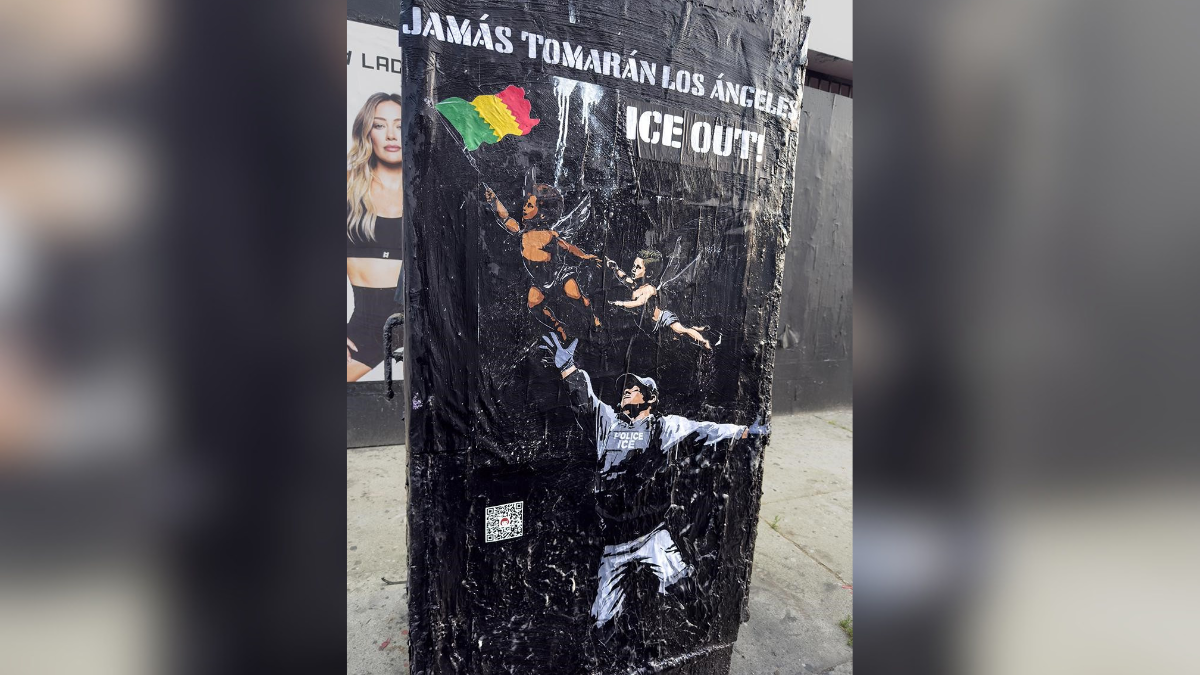
A Message Without a Face
LAIKA 1954 has worked under that name publicly since 2019, and no identity has been attached to it. For this contemporary artist, anonymity protects the message over the individual, keeping an audience's attention on the image and the idea. Asked who LAIKA is, the artist gives the same answer every time: an idea, the thought a viewer carries home once the public art itself has disappeared.
The disguise serves a practical purpose, too. The artist has described it as a filter that removes all other filters, allowing LAIKA 1954 to speak openly without fear of censorship or threats. That freedom places the work inside a wider tradition of activist art that treats the street itself as a gallery, open to anyone without a ticket or expertise in political street art.
Why Los Angeles
California's long history of social commentary art, from the Black Panthers to the Los Angeles street art scene shaped by names like Shepard Fairey, gave Southern California art audiences fluency in protest imagery. The city's entertainment industry adds reach that a smaller market couldn't, since a message placed where cameras already point travels farther.
California's pushback against federal immigration enforcement and its contradictory identity, multicultural yet sharply unequal, made the structural problems LAIKA 1954 wanted to address easier to see. That visibility was the deciding factor behind choosing Los Angeles over other American cities for this chapter.
Want OK! each day? Sign up here!
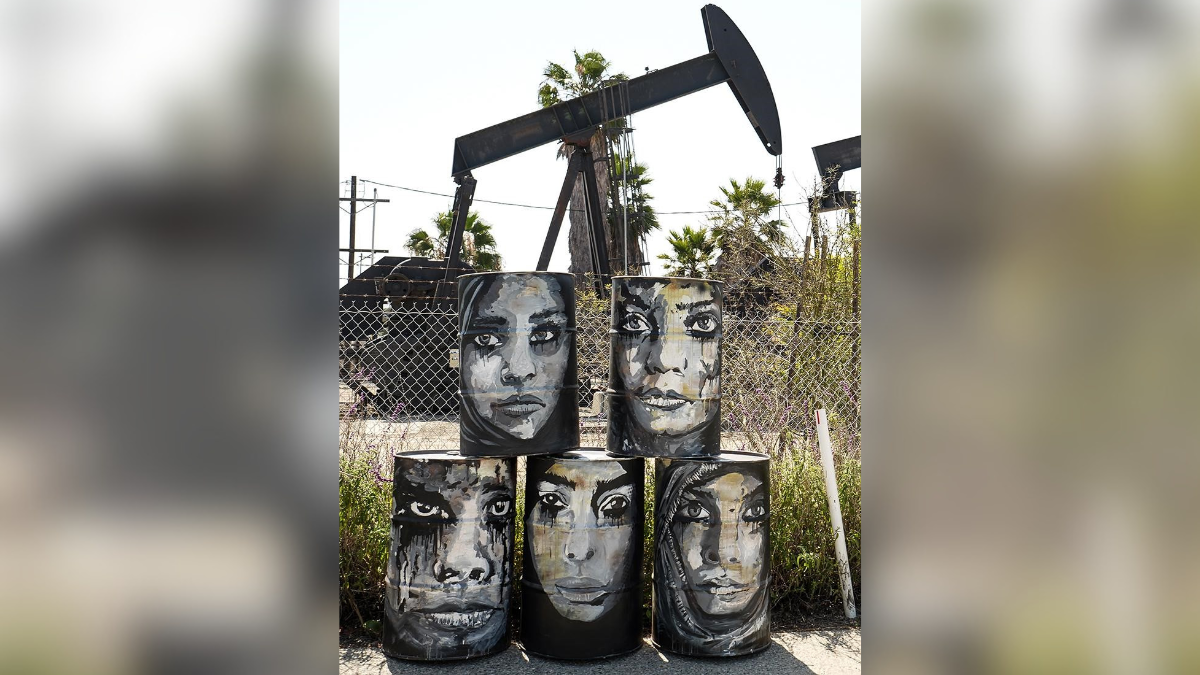
Themes Built to Outlast the Work
The Southern California chapter spans housing and poverty, corruption, nationalism, and environmental harm, often delivered through familiar imagery turned against itself. One piece extends the visual language of human rights art into Skid Row by placing a figure resembling a wealthy superhero inside one of the city's largest homeless encampments. It asks viewers who the American economic system protects and who it leaves behind.
LAIKA 1954 measures success by what happens after a piece is removed or painted over: whether neighbors keep discussing it, whether a community feels seen, and whether indignation turns into organizing. Photographs and press coverage extend that conversation, carrying contemporary street art from one sidewalk into a wider audience.
The work aims to start a conversation and trust the audience to carry it forward once the artist disappears back into anonymity. You may never learn who painted the wall you passed today, but LAIKA 1954 is counting on you to keep talking about why it was there.
The installations across Los Angeles and Southern California are documented on Instagram at @laika1954, where each piece continues to circulate long after the work comes down. For an artist who treats visibility as a tool for sparking dialogue, that continued conversation is the clearest sign the project is working.