
 LIVING
Recoleta Grand, Buenos Aires, a Tribute Portfolio Hotel, Is Located in 'One of the Most Energetically Charged Cities in Latin America': Inside the Charming and Gorgeous Property

Recoleta Grand, Buenos Aires, a Tribute Portfolio Hotel, is one of the most perfect places to stay in Latin America.

April 10 2026, Updated 1:23 p.m. ET


If Buenos Aires, Argentina, is not on your radar, it should be!
The vibrant city, located over 10 hours from New York City, is Argentina's big, cosmopolitan capital city. From 19th-century buildings, including Casa Rosada, to other major tourist attractions, including Teatro Colón, a grand 1908 opera house with nearly 2,500 seats, and the modern MALBA museum, there's plenty to do.
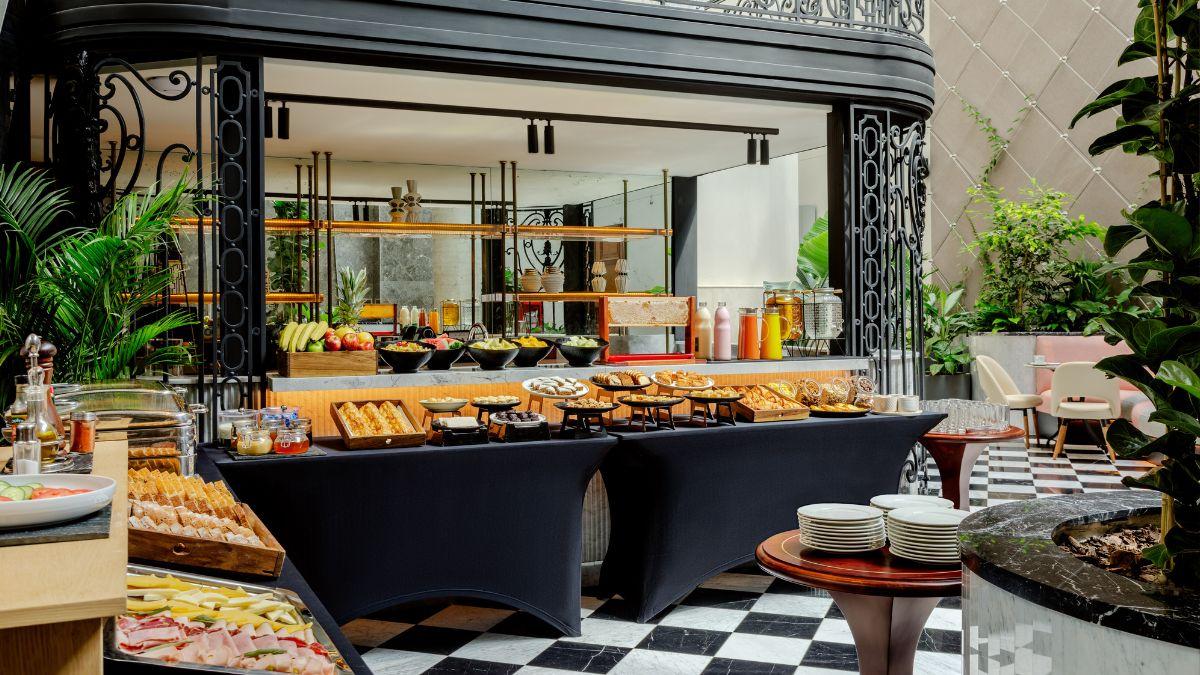
The hotel made its debut in 2025.

As for where to stay, Recoleta Grand, Buenos Aires, a Tribute Portfolio Hotel, part of Marriott Bonvoy's global portfolio of over 30 extraordinary hotel brands, made its debut in 2025.
Located in the dynamic Recoleta district – known for its European charm and cultural richness – the property is not to be missed.
"Recoleta Grand is a five-star hotel with a clear point of view: that luxury, done right, should feel effortless rather than performative. Part of Marriott International's Tribute Portfolio since June 2025 (a collection of independent-minded boutique hotels), the property brings together contemporary design, a serious culinary program, and genuine urban engagement to offer what it likes to call its mission statement: 'casual luxury with purpose.' With 142 rooms and suites, every decision, from the warmth of the materials to the neighborly instinct of its staff, is calibrated around a single idea: a cosmopolitan shelter in the heart of Buenos Aires," General Manager Mauricio Secco exclusively tells OK!.
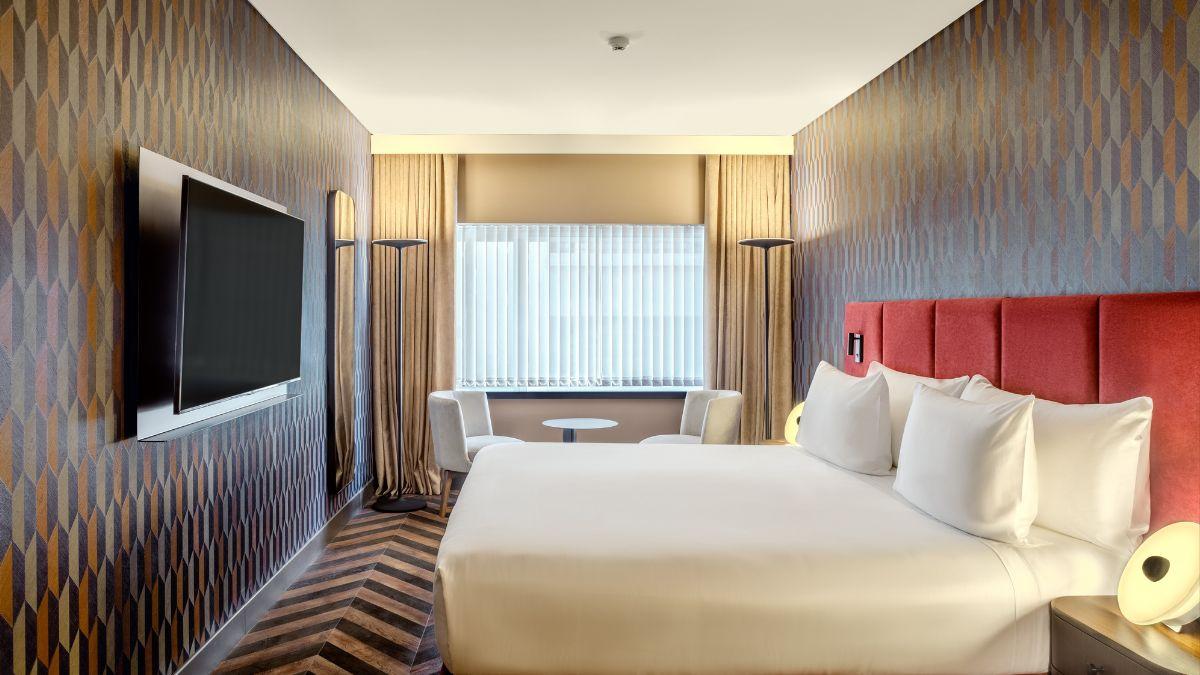
The hotel is located in one of the most charming parts of the city.
The "concept" behind the hotel is all about disconnecting.
"Buenos Aires is one of the most energetically charged cities in Latin America, and Recoleta Grand doesn't try to ignore that. Instead, it holds the tension (vibrant and serene, sophisticated and relaxed) in a way that mirrors the neighborhood itself. Every element of the hotel is designed to accompany contemporary lifestyles that weave together work, pleasure, and pause. The hotel is not a bubble, but a base camp for engaging with the city more deeply," Secco shares.
Additionally, the area made perfect sense since it is one of the most historic and walkable area, filled with Paris-style townhouses, lavish former palaces and posh boutiques.
"Few Buenos Aires neighborhoods carry as much layered identity as Recoleta. It is elegant but walkable, historic but living: its museums, century-old cafés, parks, and cycle lanes make it the kind of place that rewards close attention. For a hotel built around the idea of authentic urban connection, it's a natural home. The neighbourhood also has a particular architectural story to tell; one the hotel is now, literally, part of," Secco says. "The hotel's location is itself an argument: Recoleta is one of Buenos Aires' most walkable, culturally dense neighborhoods, positioned within easy reach of the MALBA, the Museo Nacional de Bellas Artes, and a network of parks and cycle lanes that thread through the area. The EcoBici network connects guests directly to the city's broader fabric. The hotel makes bicycles available to guests in a deliberate choice that reflects its philosophy of slow travel. Not tourism at speed, but the kind of exploration that requires time, curiosity, and a willingness to get slightly lost. It is, the hotel would argue, the best way to understand Buenos Aires."
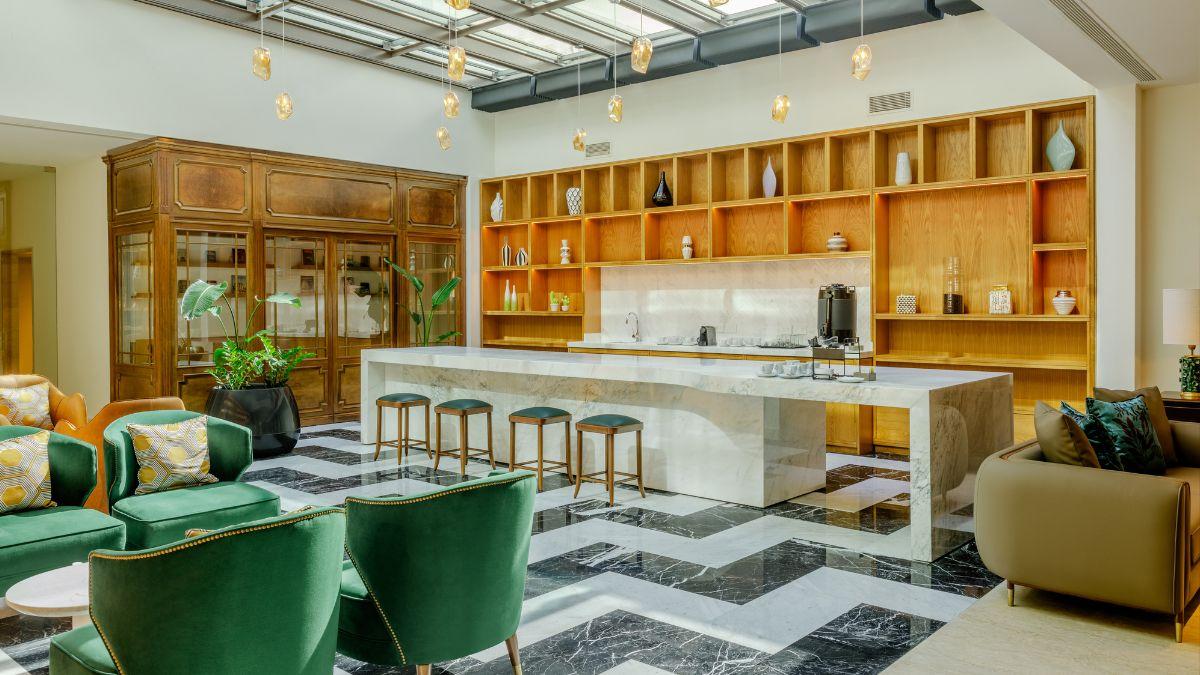
Enjoy an Argentinian wine or a fresh cup of coffee from the Recoleta coffee shop.
The hotel was "designed for the traveler who no longer draws a clean line between business and pleasure," Secco says. "Many guests are senior executives or international corporate travelers who expect seamless productivity (high-speed connectivity, versatile meeting rooms with interactive screens and HD audio, concierge-level precision, all available at Recoleta Grand). But they also expect, after the last call, to be somewhere worth being. Increasingly, the hotel also draws the bleisure traveler: someone who treats a work trip as a 'whycation,' an occasion to eat well, move through the city, get to know its culture and people and come home with more than a full inbox. And beyond overnight guests, Recoleta Grand functions as a neighborhood destination: a place where porteños come for a long lunch at Atrium, an evening cocktail at Café de Prensa, or a cultural event in Mansión Mihura."
Want OK! each day? Sign up here!
The hotel is also charming and filled with details that are not to be missed.
"In a category where 'design' has become a near-meaningless claim, Recoleta Grand treats it as a structural principle rather than an aesthetic garnish. The interiors function as a coherent language (materials, light, circulation, and cultural references working together) rather than a mood board assembled after the fact. Rooms prioritise light and spatial integration to create a sense of amplitude even in more compact formats. The result is that guests feel held by the space rather than simply contained in it. That feeling of calm, of things being in the right proportion, is itself the experience," Secco shares.
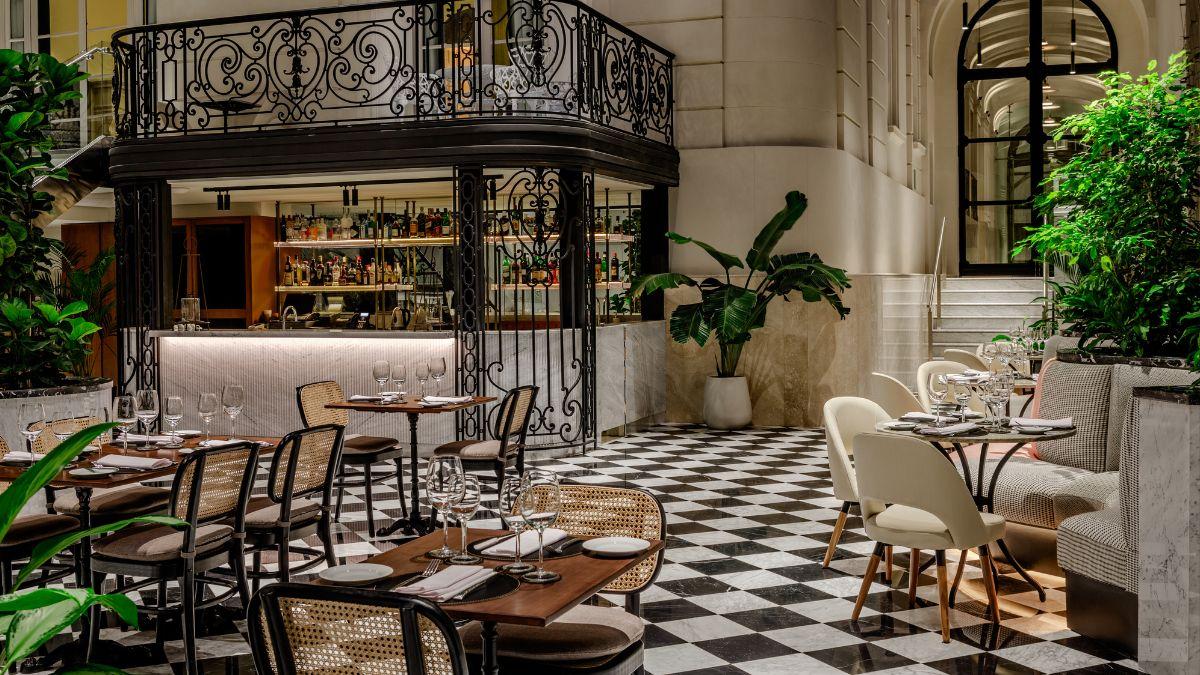
Atrium, its main restaurant, has a glass-ceilinged dining room within the restored shell of Mansión Mihura's original interior garden.
If guests are looking for fine dining, Atrium, its main restaurant, has a glass-ceilinged dining room within the restored shell of Mansión Mihura's original interior garden.
"Executive chef Maximiliano Matsumoto's approach is best described as an elevated reinterpretation of the porteño brasserie: dishes rooted in culinary memory (ojo de bife with chimichurri, lomo a la pimienta, a gratinéed onion soup), rendered with technique and restraint. Café de Prensa, on the ground floor, operates on a different register: specialty coffee, vinyl-sourced music played through a state-of-the-art audio system, and a design sensibility that pays homage to Argentina's graphic and musical history. Wednesday through Friday, between 6 and 8 p.m., it hosts a Cocktail Hour open to the public: an unpretentious, contemporary, and increasingly popular meeting point for the neighborhood. The cocktail program across the hotel reflects a broader cultural shift: one that mixes reimagined classics, signature creations, and sophisticated mocktails that match the technical and aesthetic ambition of the rest of the program. Wellness and indulgence are not framed as opposites here; the menu moves between botanical infusions and cold-pressed juices on one side, and a serious wine list and craft spirits on the other," Secco says.
There's also plenty of facilities for guests.
"The roof swimming pool is the hotel's signature amenity, an urban oasis above the Recoleta skyline, with pool-bar service during summertime and an atmosphere deliberately at odds with the pace of the city below. It is, simply, a place to stop. The forthcoming opening of the spa (including a cryotherapy pool, a first in Buenos Aires) and expanded gym facilities will complete what the hotel frames as an integral wellbeing proposition: not wellness as a brand category, but the idea that travelling well includes moments of genuine rest, movement, and sensory repair," Secco states.
This year, Recoleta Grand recently acquired and restored the adjacent Mansión Mihura, "a 1922 Belle Époque mansion which is a city-protected landmark that received the second prize for best facade in Buenos Aires that year (the jury declared the first prize vacant). The architect, Eduardo Lanús (who also directed work on the Palacio Errázuriz, today the National Museum of Decorative Art) designed a property that later passed through the hands of the aristocratic Anchorena family," Secco explains. "The mansion had fallen into serious disrepair; one of the main walls had a crack visible from the other side. Today, restored by the same team that worked on the Confitería del Molino, across the street from the National Congress, it forms an integral part of the hotel complex, adding spaces like the Atrium and La Maga restaurants, the Serpent Club and Rayuela bar, a quiet homage to Julio Cortázar, whose connection to the building (however apocryphal) became part of its renovation legend."
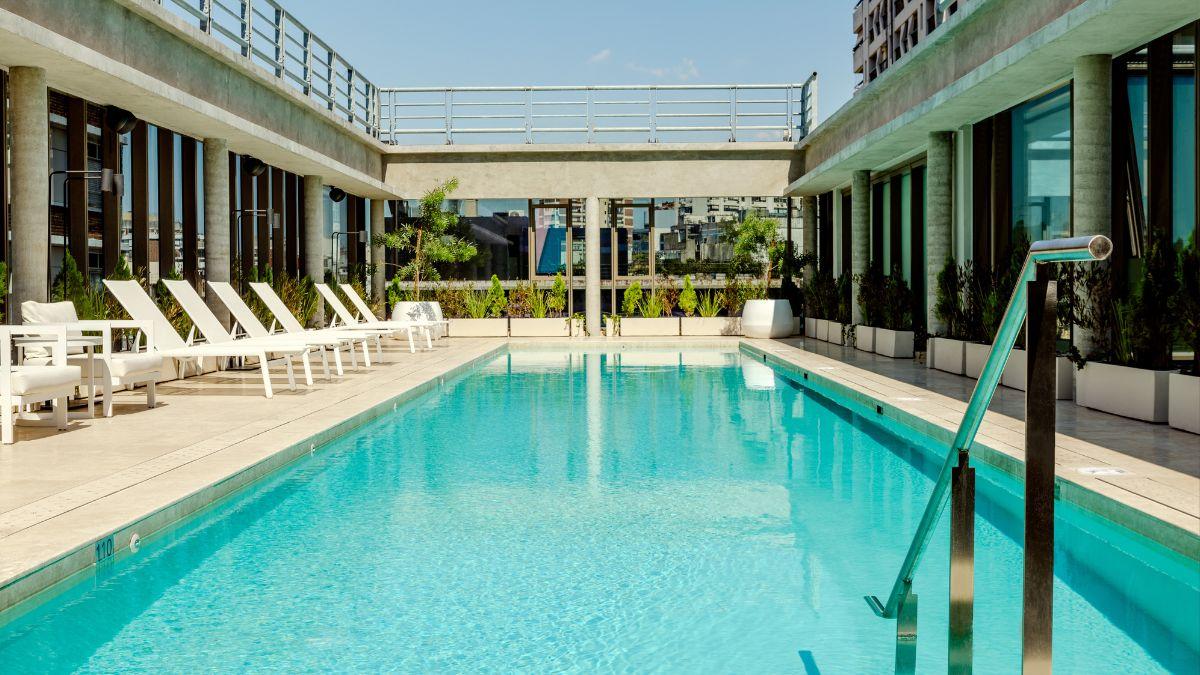
Guests can relax at the rooftop pool.
Built in 1922 on Avenida Las Heras by architect Lanús — whose portfolio includes directorial work on both the Palacio Errázuriz Alvear (now the Museum of Decorative Arts) and the Palacio Bosch — the mansion was commissioned by Francisco Mihura, brother of the minister of Agriculture under Marcelo Torcuato de Alvear presidency.
"Its facade earned second prize in the city's best facade competition that same year; the first prize was declared vacant. The mansion later passed to the Anchorena family, one of Buenos Aires' most storied dynasties, and decades of partial occupancy and deferred maintenance left it in an advanced state of decay. By the time Recoleta Grand acquired it, an exterior wall had cracked through to the other side. Much of the interior was simply sealed shut. The restoration, carried out under heritage protection grade four guidelines by the team that rebuilt the Confitería del Molino, was meticulous. Pinewood floorboards were numbered, removed, and reinstalled in their original positions. Worn stair carpets were lifted to reveal marble that had been there all along. Plaster ceiling mouldings too damaged to restore were reproduced from moulds taken from their intact counterparts. A library discovered during the works (its books untouched) was subsequently donated to cultural institutions," Secco says.
He adds, "The mansion's garden became the Atrium, a glass-ceilinged restaurant with chequered floors and tall windows. A first-floor salon, the grandest in the house, became the Serpent Club, its walls now a deep, unapologetic red. The fine dining space and bar were named La Maga and Rayuela, invoking Cortázar. Whether or not the writer ever worked in these rooms is debated. The portrait of Francisco Mihura, its first owner, found during the renovation and moved early in the works — coinciding with a series of electrical faults and small construction mishaps — has since been left in a fixed and secret location. No one has touched it since, and the renovation project was completed without a hitch. The hotel team believes Mihura must be satisfied with his new abode."
For more information, or to make a reservation, visit https://www.marriott.com/es/hotels/buetx-recoleta-grand-buenos-aires-a-tribute-portfolio-hotel/overview/.