
 NEWS
NEWSRETNA: Returning to the Roots of Art, Nature, and Family


July 7 2026, Published 5:00 a.m. ET


Where art, nature, and purpose come together.
Marquis Lewis, the contemporary artist known as RETNA, has drawn eyes from around the world. Those who have seen his work in galleries or private collections know that what one can see is really just one small part of the whole story. The meaning actually goes deeper than what lies on the surface; his pieces are a culmination of simplicity, nature, and presence.

A Style Inspired By History
RETNA’s visual identity is easily recognizable. His compositions are often script-based and are often described as contemporary calligraphy art. He is inspired by Blackletter typography, ancient scripts, and global symbol languages. The result is a unique language that seems both historical and modern.
Before he made his name as RETNA, Marquis Lewis’s earliest works emerged from Los Angeles street culture, which eventually helped define his distinct style. Over time, that culture continued to shape his own artistic voice, eventually leading to his being featured in galleries and institutions. This was a huge step for the contemporary art space, demonstrating acceptance of modern graffiti art, which has historically been left out of the space.
However, the transition into luxury contemporary art introduces a new set of pressures. Things like high commercial demands, brand alignment, and the expectation to constantly produce new works were not something he anticipated. Maintaining his sense of self and style within that system became a defining challenge.
Want OK! each day? Sign up here!
From City Walls to Open Land
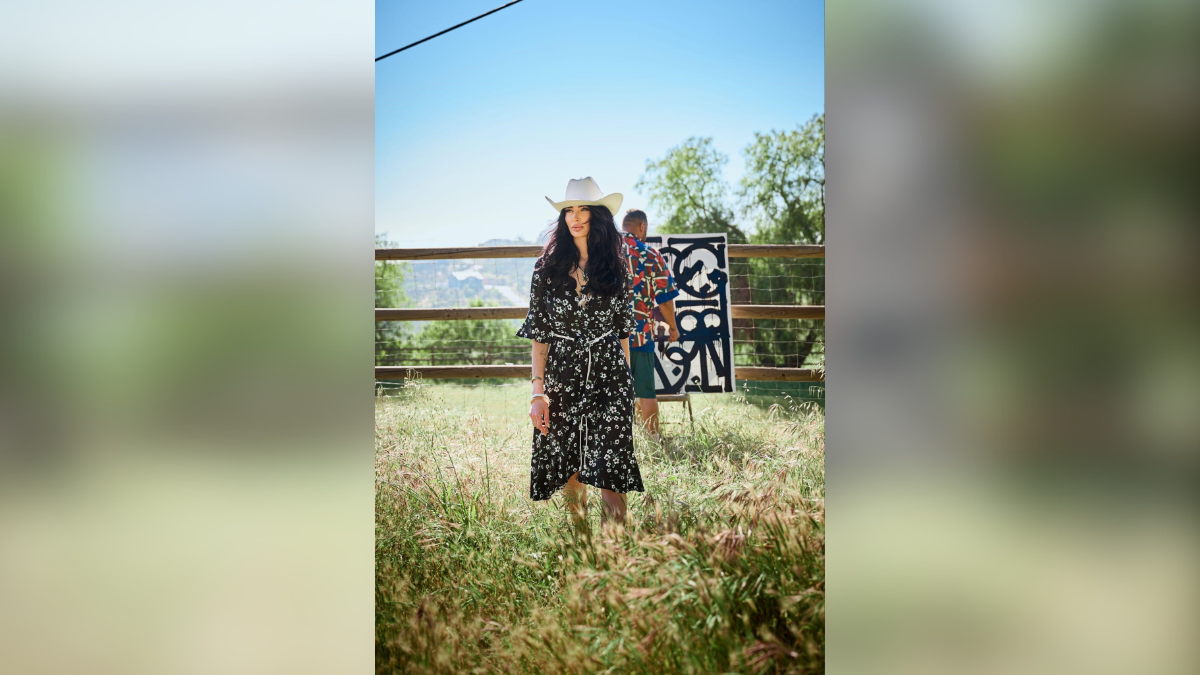
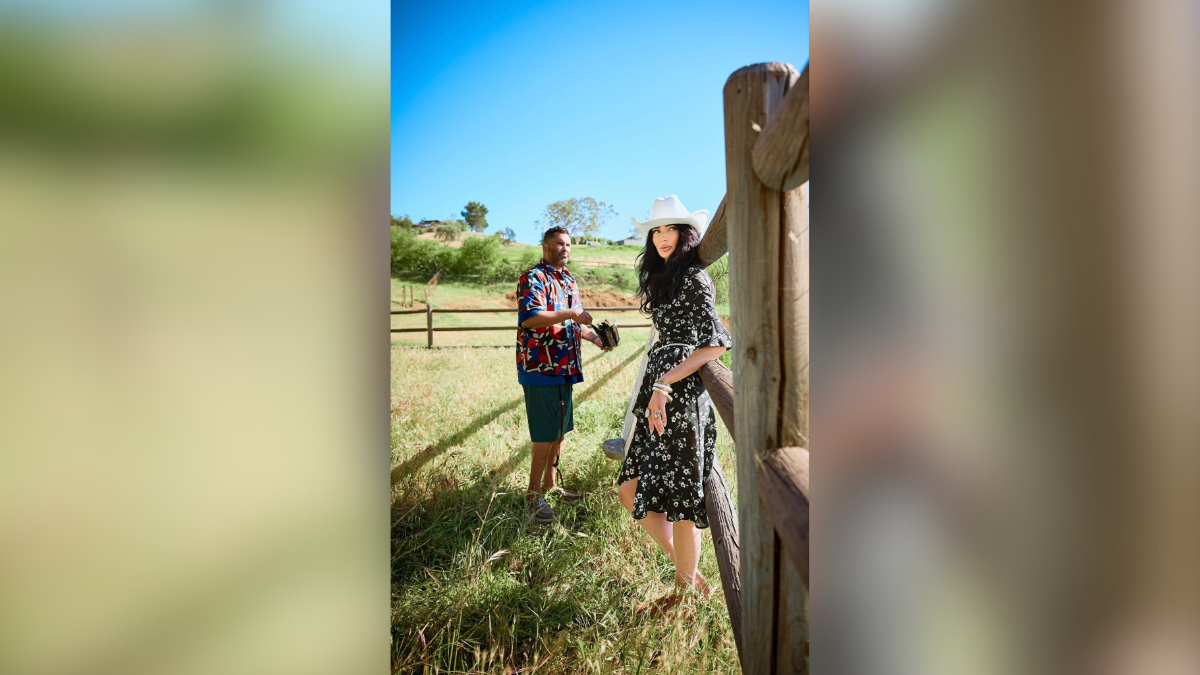
A turning point came when RETNA and his wife, Veronika Mudra Lewis, relocated their life and studio to a ranch in Southern California. The move was not for aesthetic purposes; it was a functional decision. The urban pace that once defined his process began to shift. As time went on, the work became more peaceful.
In this setting, creating distinct RETNA paintings was completely changed. It became less about producing art quickly and was more about continuity. He integrated painting into his daily routines, including family life, outdoor adventures, and quiet times. That harsh separation between work and living began to be more integrated. For those looking at his work, you can see that his more recent pieces have a stronger environmental influence and feel less urgent.
Structure Behind the Scenes
This transition was not accidental. Veronika has played a central role in shaping how RETNA’s work is managed, distributed, and protected. She has a background in nonprofit leadership and operations, which allowed her to introduce a level of structure that has allowed his creative process to be insulated. This includes choosing selective partnerships, private sales, and long-term management. The outcome is a system where his growth doesn’t depend on overexposure. Rather, his artistic integrity gets to be preserved through their constraint.
Managing Demand Without Diluting the Message
RETNA’s work continues to be seen globally, but access to it is very controlled. This is a deliberate response to a market that often begs for scale over real substance. The couple’s approach focuses on alignment between choosing where the work appears and maintaining a degree of separation between public demand and the output. This has allowed RETNA to sustain relevance without diluting the distinctiveness of his visual look.
Art As a Legacy
In the future, RETNA plans to work on institutional projects, international exhibitions, and interdisciplinary work in architecture and spatial design. He also hopes to participate in philanthropic initiatives, such as engaging with the youth and supporting communities.
His work continues to create a strong impact, despite its ongoing demand. In this, he has thoughtfully decided to slow his processes, control his environments, and create a version of ownership that prioritizes permanence over virality.