
 NEWS
NEWSShane Ginsberg of Street Poller Media on The Videos That Got the Trump Campaign to Call

Aug. 18 2026, Published 2:09 a.m. ET


Mainstream media coverage tends to gravitate toward the same handful of voices and the same handful of assumptions about who holds which opinions. Entire communities with real, strongly held views end up almost entirely uncovered, not because anyone made an editorial decision to exclude them, but because the narrative had already been written and finding contradictory voices required effort nobody was budgeting for. Historically that gap was nearly impossible for an individual to close. Reaching an audience required a platform, and platforms required institutional backing.
Short-form video changed that arithmetic. A person with a phone, a microphone, and a willingness to approach strangers on a sidewalk can now build an audience without asking anyone's permission, and the barrier to finding an underrepresented perspective has collapsed to roughly the cost of a train ticket.
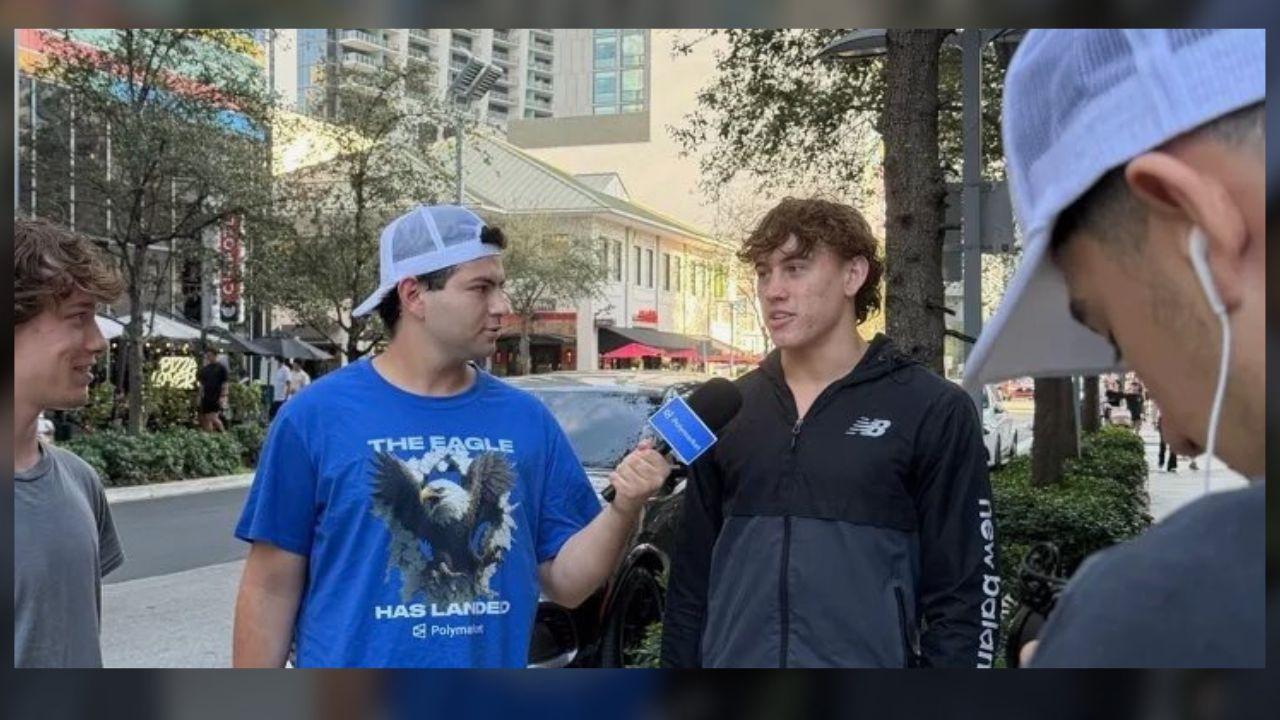
Shane Ginsberg found his way into that gap early, before Street Poller Media existed as a company in any formal sense. He began seeking out and filming everyday people in authentic street interviews. He quickly found a group of African-American conservatives in South Beach, Miami who supported Donald Trump and held views that, as Ginsberg has described it, almost no other media outlet was capturing at the time. The demographic did not fit the story most coverage was telling, so most coverage simply did not include it.

Since nobody else was filming those conversations, unsurprisingly, the buzz was close to immediate. Within three weeks of posting the videos, conservative commentator Charlie Kirk began sharing them with his own considerable audience. Shortly after that, the Trump campaign itself reached out directly.
Ginsberg has been notably unromantic about how it happened. He has described the moment less as a calculated strategic bet and more as a straightforward observation about supply and demand: an entire category of genuine opinion was going unrepresented in mainstream coverage, and putting a camera in front of it was enough to break through without any of the usual advantages. The videos required no production value, no media budget, no distribution deal, and no existing following. They required identifying people whose honest reactions nobody else had bothered to film, and then filming them.
That early experience established a pattern that has run through everything the agency has done since. The format does not perform because it is well produced. It performs when it captures something genuinely underrepresented, whether that turns out to be a political viewpoint absent from cable news, an honest reaction to a product nobody has publicly reviewed yet, or simply an opinion nobody thought to ask a stranger for.
Want OK! each day? Sign up here!
The distinction has practical implications for how street interview advertising gets deployed commercially. On one hand, a brand that treats the format as a cheaper way to produce a conventional testimonial ad tends to get conventional and worse results, because the underlying content is still just a person saying nice things on camera. On the other hand, however, a brand that uses it to surface a genuine reaction, including skepticism, surprise, or an opinion the brand did not script in advance, gets something closer to what made the South Beach videos work in the first place.
Ginsberg’s South Beach period also demonstrated something about speed that has stayed relevant to the agency's commercial model. Three weeks separated Ginsberg posting videos with no institutional backing whatsoever from a national campaign contacting him directly. That kind of compression is not available in traditional media, where reaching a decision-maker typically requires an intermediary and a considerably longer runway.
What began as a personal project driven by frustration with biased coverage ended up functioning as an unintentional proof of concept for the entire business that followed. It’s a simple formula: find the reaction nobody is capturing, film it without a script, and let the authenticity of the moment do the distribution work that a media budget would otherwise have to pay for.