
 NEWS
NEWSThe Power of Presence: The Killer Dueling Pianos Turns Live Music Into Shared Memories

THE KILLER DUELING PIANOS

Sept. 17 2026, Published 1:30 a.m. ET


A song can arrive instantly today. A concert can stream from a living room, a playlist can run for hours, and almost any performance can be replayed on demand. That abundance has expanded access to music in remarkable ways. It may also be making the physical experience of hearing music live increasingly distinctive. The harder music becomes to access in a physical, shared setting, the more valuable that experience may become.
Ryan Bueter, founder of The Killer Dueling Pianos and a veteran live entertainer with decades of performance experience, has spent years observing that distinction from the stage. His perspective is shaped by performances at corporate gatherings, weddings, fundraisers, casinos, and private events. For Bueter, premium entertainment increasingly relates to the experience of being present when something happens that belongs specifically to that audience, venue, and evening.

“People can listen to the same song a thousand times, but they only get one version of the night they’re standing in,” Bueter states. “That’s where live entertainment has its greatest opportunity. The music becomes part of a memory that can only happen with those people, in that room, at that moment.”
That philosophy begins with a simple question: What role should music play once guests have gathered together? At some events, music may function primarily as accompaniment to dinner, networking, speeches, or other programming. Bueter sees another possibility. He believes entertainment can become an active force within the room, giving guests a reason to look up, respond, sing, laugh, and participate.
“A great live show should have a pulse of its own. You want people to feel invited into the performance. When the room starts responding, the performers have something to work with, and the audience becomes part of the creative process,” Bueter shares.
That principle informs The Killer Dueling Pianos’ all-request format. Guests can request songs, performers can respond in real time, and familiar music can become a starting point for interaction. A request from someone in the audience may lead to a sing-along, a spontaneous exchange, or an unexpected change in the atmosphere. The repertoire provides possibilities; the people in the room help determine which possibility emerges.
The distinction matters because audiences often remember specific moments more readily than the sequence of songs that produced them. A particular chorus sung by an entire room, a performer responding to an enthusiastic guest, or an unexpected song that brings several generations together can become the story people repeat afterward.
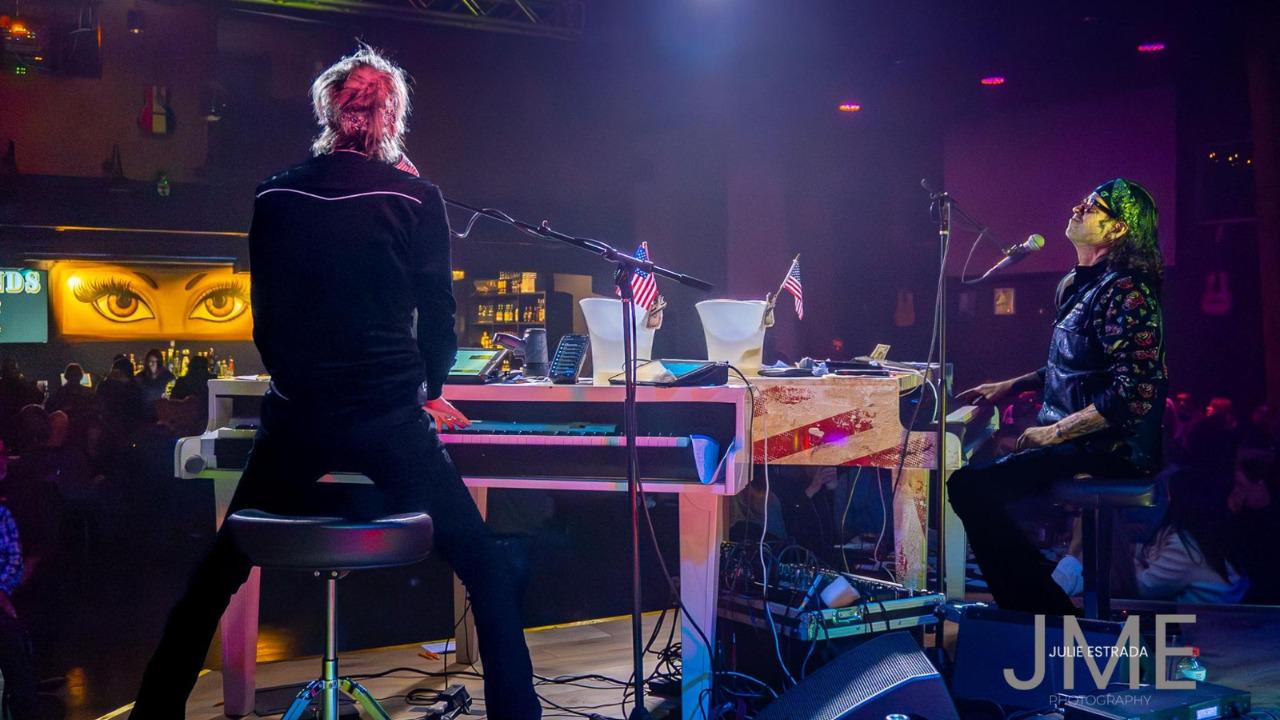
THE KILLER DUELING PIANOS
Want OK! each day? Sign up here!
Bueter describes that unpredictability as an essential part of the experience. “Preparation gives you the tools, but spontaneity gives you the moment,” he remarks. “You can have a catalog of 2,000 songs and still have no idea which request will become the memory everyone takes home.”
That appetite for shared experiences also appears in broader entertainment research. A 2026 Forbes analysis of live entertainment points to growing audience interest in large-scale physical experiences, even as digital access to entertainment continues expanding. The analysis cites 2025 stadium concerts averaging 56,272 tickets sold per show. It also references research indicating that 93% of surveyed people attend shows because they seek physical experiences over virtual ones, while 77% say the crowd contributes to feeling part of something larger.
Those figures offer an interesting context for smaller-scale events, too. The appeal of live entertainment may extend beyond spectacle or production scale. A room filled with a few hundred people can offer its own version of shared discovery. Everyone hears the same song, reacts to the same performance, and contributes to an atmosphere that exists for a limited period of time.
Bueter’s work reflects that idea through an intentionally participatory format. The Killer Dueling Pianos travels with its own instruments, sound, lighting, and performers, allowing the experience to adapt across different types of events. The production provides structure, while requests and audience reactions give each performance room to develop its own character. Bueter says, “Every audience brings something different. Our job is to listen as much as we perform. When you understand what people are responding to, you can give them more opportunities to participate.”
That perspective may become increasingly relevant as event organizers compete for attention in environments filled with digital stimulation. Guests arrive with personalized feeds, playlists, notifications, and entertainment available through their phones. Live events offer a different social setting, where participation happens collectively, and the experience unfolds in real time.
The meaning of luxury may consequently be expanding. A premium entertainment experience can include sophisticated production, talented performers, and polished execution, while its most memorable element may be much simpler: being present when something unexpected happens. A song request turns into a room-wide chorus. A performer responds to an audience member. A familiar song suddenly acquires a new memory.
Bueter sees that sense of presence as central to the future of live entertainment. “I think people will continue to value experiences where they have a role in what happens,” he says. “The stage can provide the music, but the audience provides the story.”
That story leads back to the reason people gather in the first place. Recorded music can preserve a performance with extraordinary precision. A live performance offers something more specific: the particular crowd, the particular room, the particular reaction, and the particular night.
For Bueter, that distinction points toward a compelling direction for live entertainment. “The future isn’t about making live music behave like something you can experience through a screen,” he notes. “It’s about giving people a reason to be in the room, raise their voices, and become part of something that can only happen once.”