
 NEWS
NEWSThe Quiet Canadian Driving a Global Pollinator Rebirth

June 12 2026, Published 5:01 a.m. ET


When scientists warn about collapsing ecosystems, they often begin with bees. Their disappearance acts like a fault line beneath global food systems, threatening crops, livelihoods, and the biodiversity that sustains entire continents. One-third of global food production depends on pollinators, yet bee populations have plummeted by 40% in recent years. When pollinators vanish, food prices spike, rural communities empty out, and global supply chains buckle.
In remote corners of Ecuador’s Amazon basin and across Kenya’s Maasai Mara, a quiet counter-revolution is unfolding. It is powered not by governments or multinational organizations, but by a Canadian philanthropist who prefers to stay out of the spotlight.
Dave Richardson, Board Chair and Co-Founder of the Stigma-Free Mental Health Society and a founder or co-founder of numerous companies focused on environmental and green technologies, has spent decades at influential global tables. Yet when asked where some of the world’s most important work is happening, he points not to boardrooms or policy forums, but to the quiet hum of a beehive and the prosperity of the rural communities that surround it.
Inside Dave Richardson’s Work in Kenya
The story begins in Kenya. In 2018, in partnership with WE.org, Richardson funded the construction of a beekeeping hub at Oleleshwa Farm in the Maasai Mara. The gathering center for men was fittingly named the Beehive. The inspiration came from something Richardson witnessed during a visit to the region with his wife, Pamela, and son, Colby.

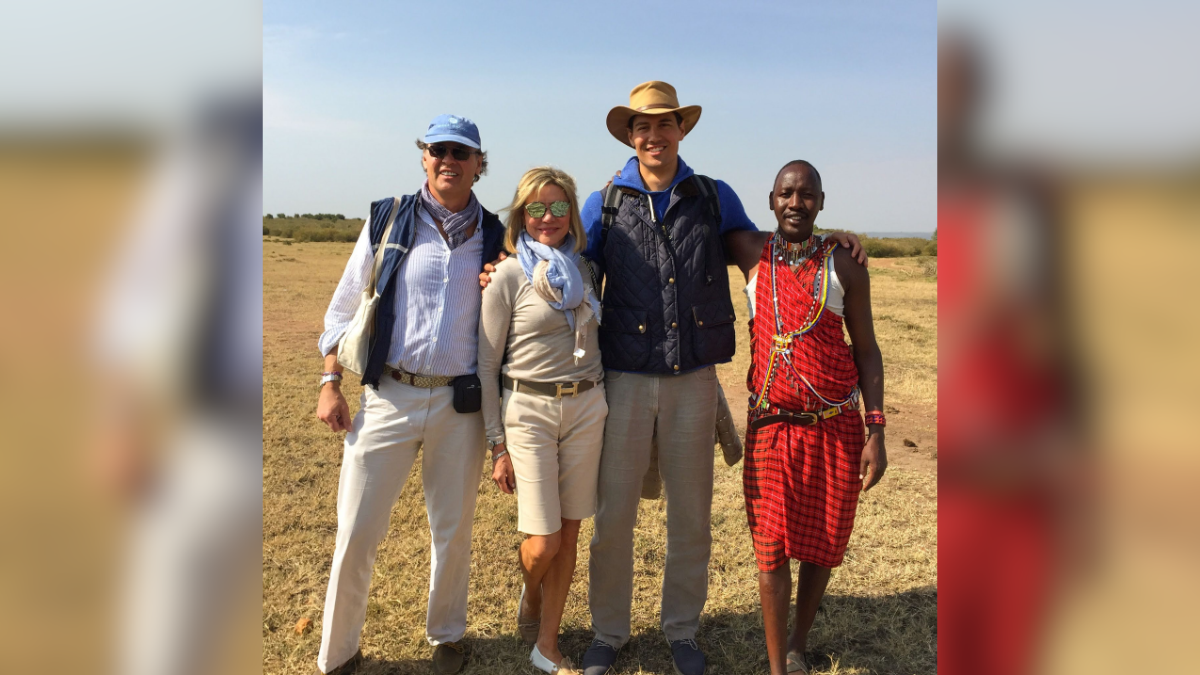
“As we traveled the dusty roads and visited the villages and high schools, I could see the girls in their uniforms, smiling and proud, going to class,” he recalls. “They dream of being dentists, accountants, lawyers, and airline pilots, while the boys were barefoot with sticks in hand, herding goats or sitting along the side of the road.”
What Richardson saw was a society in transition. The once-proud warriors of the Maasai Mara had lost a clear sense of identity and purpose. 400 women gathered around a collective. The men had no equivalent. His response was to create one.
Want OK! each day? Sign up here!
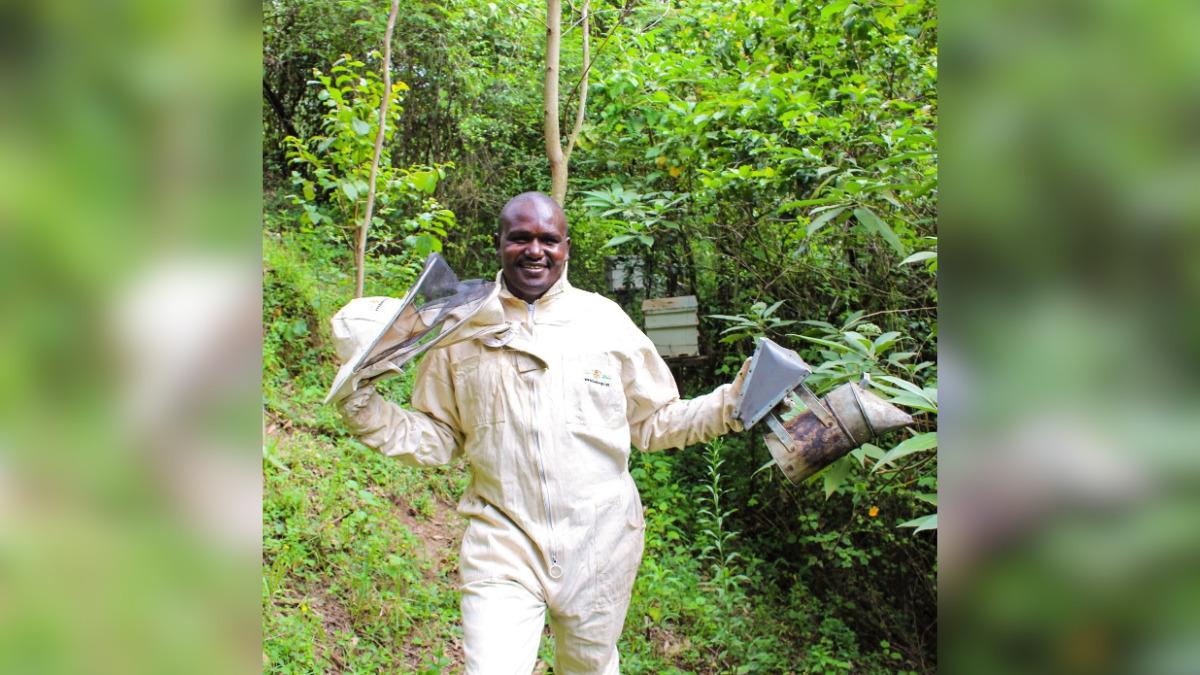
The Kenya program trains local beekeepers in sustainable practices and teaches carpentry skills so men can build quality hives themselves. A second phase, also funded by the Richardson family, provided woodworking tools enabling participants to build and supply hives to new beekeepers, creating an additional income stream.
The skills learned have also allowed men to produce other wooden items for home use or sale, broadening the economic base of entire communities. Participants in the beekeeping program have increased their household income by an average of 25%, allowing families to buy cattle, send their children to school, and care for their homes more fully.
There is also a benefit that tends to surprise people. Beehives are now strategically positioned around village perimeters to deter elephants, who trample vegetable gardens and disrupt community life. Bees are one of the few things an elephant fears. It is a small detail that speaks to the ingenuity of locally led solutions.
Expanding Impact from Kenya to Ecuador
The Ecuador chapter of the story began when Richardson’s son, Quinten, worked with WE Charity in the country, and the program expanded to include families in remote regions of the Amazon basin. In regions of both Kenya and Ecuador, honey is considered a medicine, essential to the culture and diet of indigenous communities. The loss of native pollinators has made it scarce. However, these programs have restored access.
Across more than 20 beneficiary communities in Ecuador, families learn to steward colonies of native Melipona stingless bees, tiny creatures barely larger than a fingernail that have pollinated Amazonian forests for millennia. The honey varies dramatically from valley to valley, shaped by altitude, flowering cycles, and forest health.
Each jar tells a story about the ecosystem that produced it. An added benefit has been higher crop yields: increased pollination has expanded the local food supply and is feeding families who previously had little margin.
“Without pollinators, we don’t just lose honey. We lose food security for entire regions,” says Camila Torres, Manager of the Pollinator program for WE Charity in Ecuador. “When bees disappear, economies collapse, and families go hungry.”
The program has expanded to eight high schools in partnership with Ecuador’s Ministry of Education, creating a new generation of bee ambassadors. Young beekeepers like Ángel Octavio Malan Guaraca are earning substantial income by dedicating just one day per week to the work. “Beekeeping surpasses earnings from traditional agricultural activities,” he explains.
Advocacy Built on On-The-Ground Experience
Richardson’s understanding of how systems connect stems from decades of experience in conservation and global trade. He was a founding member of the Asia Pacific Foundation, a board member of the Canada-China Trade Council, and a past director of the World Wildlife Fund. He spent 25 years on the board of Ducks Unlimited Canada, where he now serves as Director Emeritus.
He has also sat on numerous corporate and philanthropic boards in Canada and internationally. These experiences confirmed what he had long believed: environmental collapse and economic collapse are not separate events. One leads directly to the other.
“People ask me what keeps ecosystems alive,” mentions Inti Macias, Director of Operations for WE Charity in Ecuador. “I tell them: look at the pollinators. Everything else flows from there. And for families here, this work means their children can dream again.”
Richardson’s approach stands in sharp contrast to the usual narratives of conservation. He is not chasing headlines or promoting a brand. He invests in local transformation and trusts that real change happens at ground level. One hive at a time. One family at a time. One community learning to protect the creatures that keep the world alive.
The bees are still under threat. The ecosystems are still fragile. But in Ecuador and Kenya, something is shifting. Families are thriving. Pollinators are recovering. And a quiet Canadian is helping rebuild the systems people all depend on.