
 NEWS
NEWSA TikTok Couple's Heated Tip Debate Sparks Discussion on Who Should Pay Restaurant Workers a Living Wage

A TikTok couple’s disagreement over restaurant tipping sparked a discussion about fair wages for service workers.

Oct. 13 2026, Updated 7:11 a.m. ET


A TikTok couple’s disagreement over tipping has sparked debate about whether customers should help restaurant workers earn a living wage or whether employers should take responsibility for paying their staff fairly.
Per the Daily Dot, the video was posted by the TikTok account Floofy Doofyy on January 9.


A couple’s opposing views on tipping prompted questions about their compatibility.
It showed a woman acting out a couple's argument after one partner refused to leave a tip despite receiving good service.
The caption asked viewers, "Whose side are you on?"
As of now, the clip has received 768.5K likes and 1,798 comments.
Couple Disagrees Over Restaurant Tipping
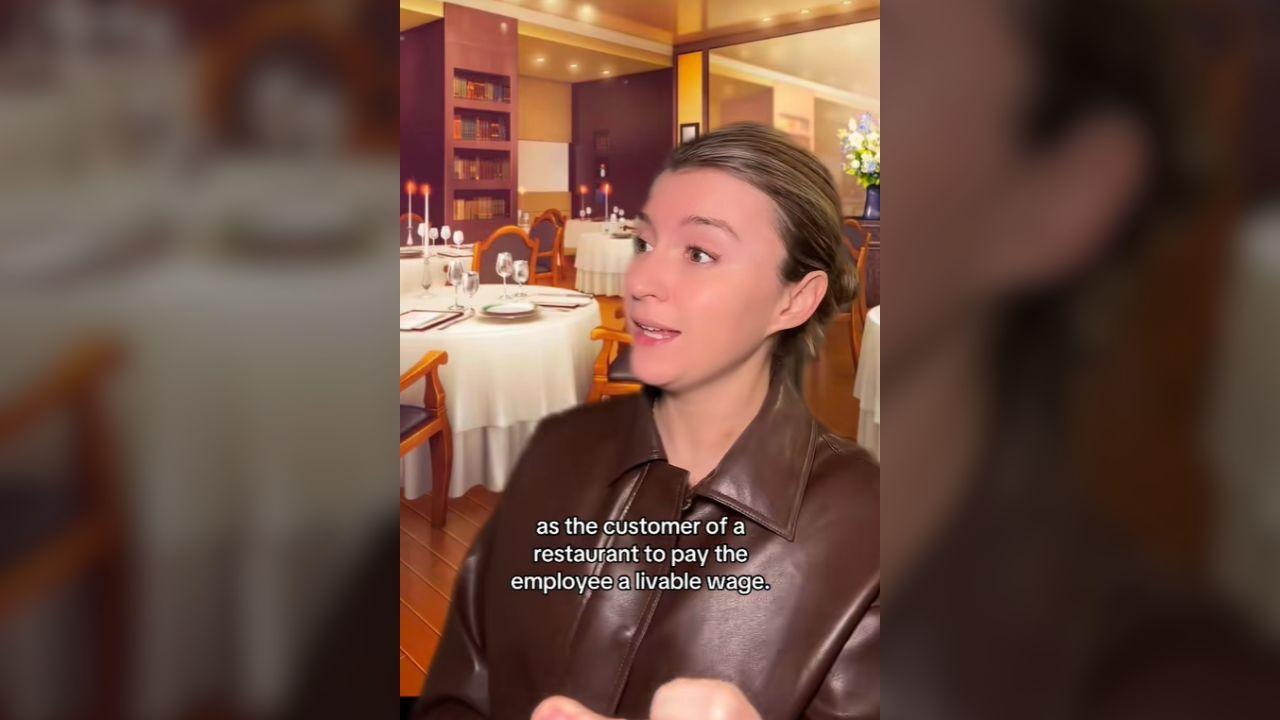
The TikTok debate focused on whether customers should supplement restaurant workers’ wages.
The video showed one partner asking for money to tip the server, while the other questioned the expectation.
Their disagreement grew as they discussed tipping customs in the United States and whether customers should be responsible for supplementing restaurant workers’ wages.
One partner also brought up previous dining experiences, including a restaurant bill that exceeded $400. The discussion raised questions about whether a more expensive meal should automatically mean a larger tip if the quality of service remains the same.
The disagreement eventually led the couple to question whether their different views on tipping made them incompatible.
TikTok Viewers Debate Who Should Pay Workers Fairly
- Nolan Wells' Friends Sue TikTok Creator Who Said 'They Are Guilty. They Did Something' After His Death
- Mike 'Sugar Bear' Thompson Says He Proposed to Woman He Met on TikTok With a Ring From His Fiancée’s Mom
- Cassie Ventura Slammed by Former Male Escort Accusing Her of 'Lying' About Diddy Freak-Off Parties: 'She's Not a Truthful Woman'
Want OK! each day? Sign up here!

Viewers questioned the tipping system while discussing the impact on restaurant staff.
The video prompted mixed reactions, with many commenters criticizing the tipping system while supporting restaurant workers.
One user who said they had worked in the service industry agreed with the argument against tipping, while others said employers should pay their staff enough to cover their living expenses.
Some viewers pointed out that refusing to tip could hurt workers who depend on gratuities to make ends meet. Another commenter said they would continue tipping until the system changed.
Others questioned why tipping had become common beyond sit-down restaurants, including at coffee shops and fast-food counters.
Survey Finds Americans Feel Pressured To Tip In More Places

A 2023 survey found that 72% of U.S. adults felt tipping was expected in more places than before.
A 2023 Pew Research Center survey found that 72% of U.S. adults felt tipping was expected in more places than it was five years earlier.
The findings highlighted growing frustration with tipping culture, including uncertainty over when customers should tip and how much they should leave.
Federal Law Sets Minimum Pay Rules For Tipped Workers
Federal law allowed eligible tipped workers to earn a lower direct wage when tips brought their total pay to the required minimum.
The debate also highlighted how restaurant workers are paid in the United States. Under the federal Fair Labor Standards Act, eligible tipped employees can receive a direct wage of as little as $2.13 per hour if their tips bring their total earnings to at least the federal minimum wage of $7.25 per hour.
Employers must make up the difference if an employee’s wages and tips fall short of the federal minimum. However, many states require employers to pay tipped workers a higher direct wage, according to the U.S. Department of Labor.
These rules help explain why tips can account for a significant share of restaurant workers’ earnings and why the debate over who should pay them fairly continues.