
 NEWS
Whale-Watching Trip Turns Into 67 Days Adrift in Asia's Coldest Sea. The Survivor Ties His Dead Brother and Nephew to the Boat So They Don’t Wash Away

Image of a whale-watching trip turned tragic as a survivor tied his dead brother and nephew to the boat.

Oct. 28 2026, Published 7:15 a.m. ET


A Russian man survived 67 days adrift in the Sea of Okhotsk after his brother and teenage nephew died during a whale-watching trip.
Per a video shared by the Daily Mail on TikTok, Mikhail Pichugin tied their bodies to the inflatable boat to keep them from washing away as he struggled to survive on rainwater and limited food.

Mikhail Pichugin survived 67 days adrift in the Sea of Okhotsk after his brother and nephew died.
According to CBS News, Pichugin set out with his 49-year-old brother and 15-year-old nephew, but their boat's engine failed on August 9 as they traveled back.
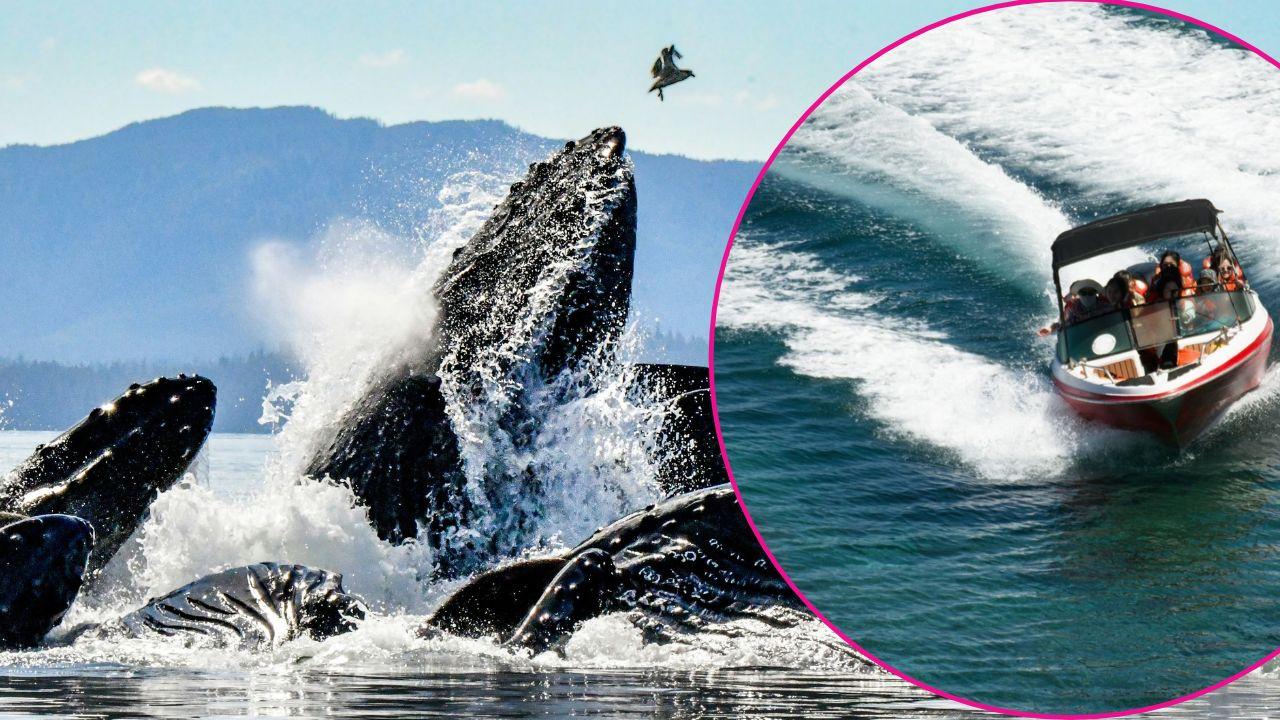
A Russian man survived 67 days adrift after his brother and teenage nephew died during a whale-watching trip.
After initial search efforts failed to locate them, a fishing vessel eventually spotted Pichugin about 11 nautical miles off Russia's Kamchatka Peninsula, roughly 540 nautical miles from where the trip began.
Mikhail Pichugin Describes His Rescue
- Will Smith's Near-Death Dive at the North Pole: 'Accidentally Pulled My Mask Off!'
- Mom Believed Her Boyfriend and Kicked Her 16-Year-Old Daughter Out. Then the 'Stolen' Money Turned Up in His Car: '$300 I Never stole'
- Boston Woman Orders a 20-ounce Blue-Rare Ribeye for $38 at Texas Roadhouse. Then She Cuts Into It and Says, 'The Smell of That…'
Want OK! each day? Sign up here!
A Russian man survived 67 days adrift before a fishing crew rescued him after his brother and nephew died.
After being brought to safety, Pichugin spoke about the fishing crew that found him.
"A boat called Angel saved me," he said, smiling, referring to the vessel's name.
Speaking to reporters from his hospital bed, Pichugin explained that the broken engine and a damaged oar left the boat difficult to control. The phone onboard worked for geolocation for about a week, but there was no network coverage.
Once its battery and a power bank ran out, the men could no longer use it. They also tried to signal rescuers with their limited supply of flares.
Pichugin recalled seeing aircraft pass overhead without being rescued.
"A helicopter flew past close, than another one after three days, but they were useless," he said in comments broadcast by Russian state television.
Survivor Relied On Rainwater And Limited Food
A Russian man clung to faith and memories of his mother and daughter while surviving 67 days at sea.
With little food and no reliable way to contact rescuers, Pichugin and his relatives collected rainwater and tried to stay warm. Their supplies included noodles and peas, and they also attempted to catch fish.
"There was a sleeping bag with camel wool, it was wet and didn't dry," he said.
"You crawl under it, wiggle a little and get warm," he added.
Russian media reported that Pichugin's nephew died from hypothermia and hunger in September. His brother later began behaving erratically and tried to jump into the sea.
Pichugin credited his survival to his faith and the family waiting for him at home.
"Thanks to God's help," he said, adding softly that "I simply had no choice, I had my mother and my daughter left at home."
Pichugin Receives Hospital Care As Investigation Begins

Mikhail Pichugin remained stable in hospital after surviving 67 days at sea with only two weeks of supplies.
Doctors at a hospital in Magadan said Pichugin was suffering from dehydration and hypothermia but remained in stable condition.
Deputy Governor Tatiana Savchenko described his condition as "satisfactory" and said the regional administration would cover his flight home and travel costs for relatives visiting him.
Pichugin is from Ulan-Ude in Siberia and worked as a driver on the far eastern island of Sakhalin. His wife, Yekaterina, described the rescue as extraordinary.
"It's a kind of miracle," she told RIA Novosti, adding that the men had taken enough food and water for only two weeks.