
 Politics
What Are 'Trump Accounts'? Inside the $1,000 Baby Fund Everyone's Talking About

A new federal savings plan promised newborns a $1,000 market investment.

March 26 2026, Published 7:08 p.m. ET


A new financial idea is suddenly getting celebrity backing, political buzz, and plenty of parental curiosity: so-called “Trump Accounts,” a program that promises to give newborns a $1,000 head start in the stock market.
Touted as a way to build generational wealth from birth, the accounts were introduced as part of President Donald Trump’s latest tax legislation, with the federal government seeding $1,000 for eligible babies born between 2025 and 2028. The funds are invested in stock market index funds and can’t be accessed until the child turns 18, raising both excitement and questions about whether this is a meaningful financial tool or just a symbolic gesture.
The Promise of a Head Start


Experts said long-term growth of these savings account depends on steady contributions.
“The Trump Accounts are a powerful savings tool that everyone with children should take advantage of,” says Derek Reisfield, co-founder and original chairman of MarketWatch. “Even if you contribute a couple of hundred dollars each year, you can build a substantial next egg or rainy day fund.”
He points to the power of compounding: “If you have a child that is born this year, the government will seed your child's Trump Account with $1,000. If you can put $5,000 each year for the first 17 years of your child's life, and the account earns a 10 percent return on the account, the account will be worth over $20 million when your child is 65.”
Where the Real Strategy Comes In

Financial experts urged families to plan early for future tax advantages.
Financial experts say the account itself is just the starting point.
“The account itself is not the strategy. The strategy is what you do with it at age 24,” says David A. Perez, Enrolled Agent and CEO of Tax Maverick AI.
Because the gains on Trump Accounts are taxed as ordinary income, Perez argues the key moment comes when the child reaches a low-income phase early in adulthood.
“That’s the window to convert to a Roth IRA. You're paying taxes at the lowest rate that child will likely ever see… After that, every dollar grows completely tax-free, potentially for the next 35+ years," he notes.
Without that kind of planning, he warns, families could miss the biggest advantage: “Most families are going to leave the real money on the table because they don't know the play.”
- 'When Did I Do That?': Donald Trump Caught Forgetting His Own $2K Tariff Check Promise as Health Rumor Swirl
- Jimmy Kimmel and Seth Meyers Torch 'Petty' Donald Trump Over Robert Mueller Death Comments: 'So Deeply Childish'
- Whoopi Goldberg Disses 'Needy' Donald Trump as the 'Most Snowflakiest President I've Ever Seen' After He's Given Inaugural 'America First Award'
Want OK! each day? Sign up here!
The Trade-Offs Families Should Know

Analysts warned the initial deposit alone would not be enough.
While the program offers flexibility — funds can be used for education, a home, or starting a business — it also comes with tax implications.
“All of the gains… will be taxed as ordinary income,” says Anil Melwani, CPA at 212 Tax Services. “That is a major difference between these accounts and College Savings accounts.”
Melwani also cautions against overestimating the initial government contribution.
“The first thing to consider is to not rely on the only $1000 of free money making a major difference in your child’s life,” he continues. “It’s all about diversification. Never keep all your eggs in one basket.”
A Trend or a Long-Term Shift?
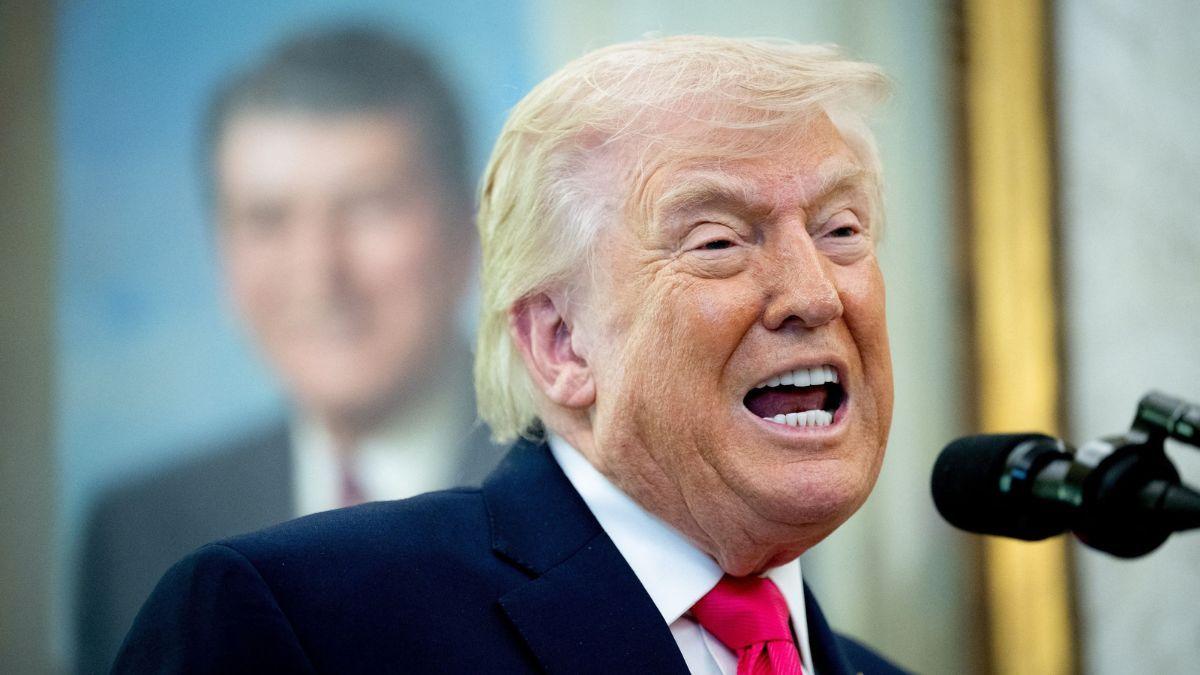
The program sparked debate over wealth-building and long-term strategy.
For now, Trump Accounts sit at the intersection of policy and personal finance, offering a tool that could be powerful — or underused — depending on how families approach it.
“A $3 million tax-free retirement account starting from birth is not a fantasy. It's arithmetic. But it requires a plan,” Perez admits. “This is exactly the difference between a tax preparer and a tax advisor. Preparers report history. Advisors shape outcomes.”