
 EXCLUSIVE
The Horrific Truth Behind Most Noble Nazi Trials Ever as Russell Crowe Drama Rips Lid Off Nuremberg Court Dramas

Russel Crowe's 'Nuremberg' film uncovers the reality of the 'most notable' Nazi trials.
Dec. 7 2025, Published 3:00 p.m. ET


Russell Crowe is taking center stage in a new examination of the Nuremberg trials, with his latest drama casting fresh light on how the Allies chose law over vengeance in the chaotic aftermath of Nazi Germany's defeat – and we have all the horrific details showing the truth behind the movie.
Six months after Germany surrendered in May 1945, the Allied powers – still reeling from nearly 30 million military deaths and the devastation of Europe – established an unprecedented tribunal in the Bavarian city of Nuremberg to prosecute Adolf Hitler's top surviving officials.

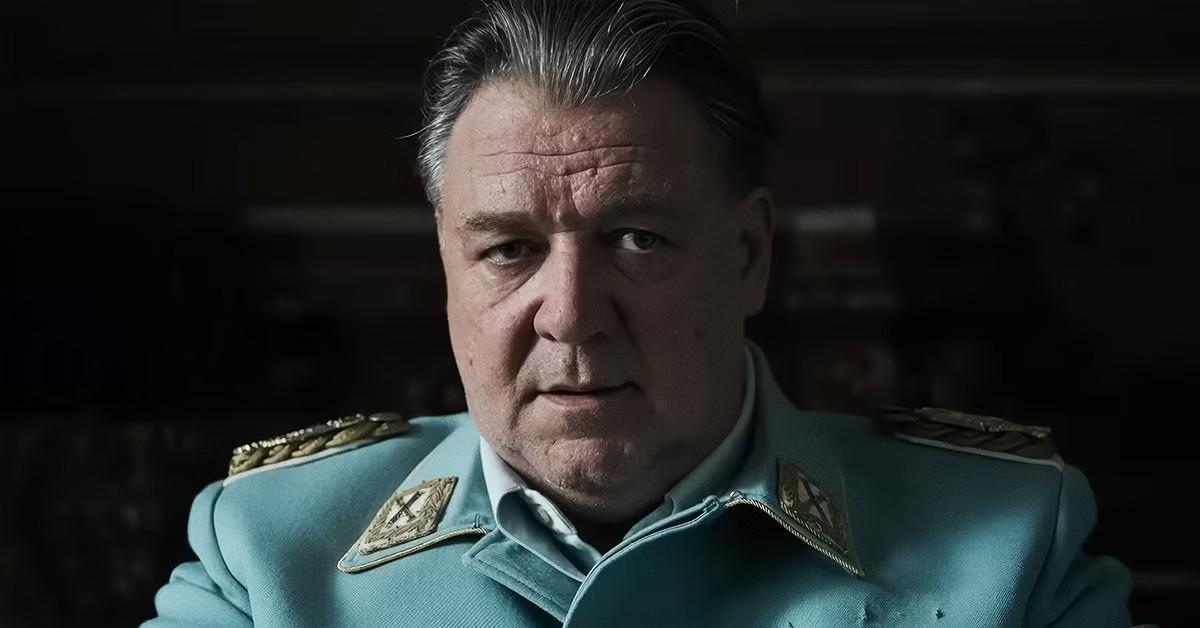
Russell Crowe stars in 'Nuremburg.'
Nuremberg, starring Oscar winners Crowe and Rami Malek, revisits the events that unfolded when psychiatrist Douglas Kelley, played by 44-year-old Malek, assessed Hitler's deputy Hermann Goering, portrayed by Crowe, 61. The nearly year-long proceedings, which began on November 20, 1945, introduced the charge of crimes against humanity, exposed the world to images of extermination camps and forced the public to confront the newly defined crime of genocide.
The trials were overseen by British judge Sir Geoffrey Lawrence, whose grandson Patrick Lawrence, KC, has now recalled the political divisions that shaped the tribunal.
He said: "Churchill had originally suggested simply putting them up against a wall and shooting them."
"But it was pointed out to Churchill that it wouldn't be a good way to set out on hopefully making a better world. So he was persuaded this wasn't a good idea, hence the decision to have the trials, and my grandfather worked very hard to give them a fair trial," he added.
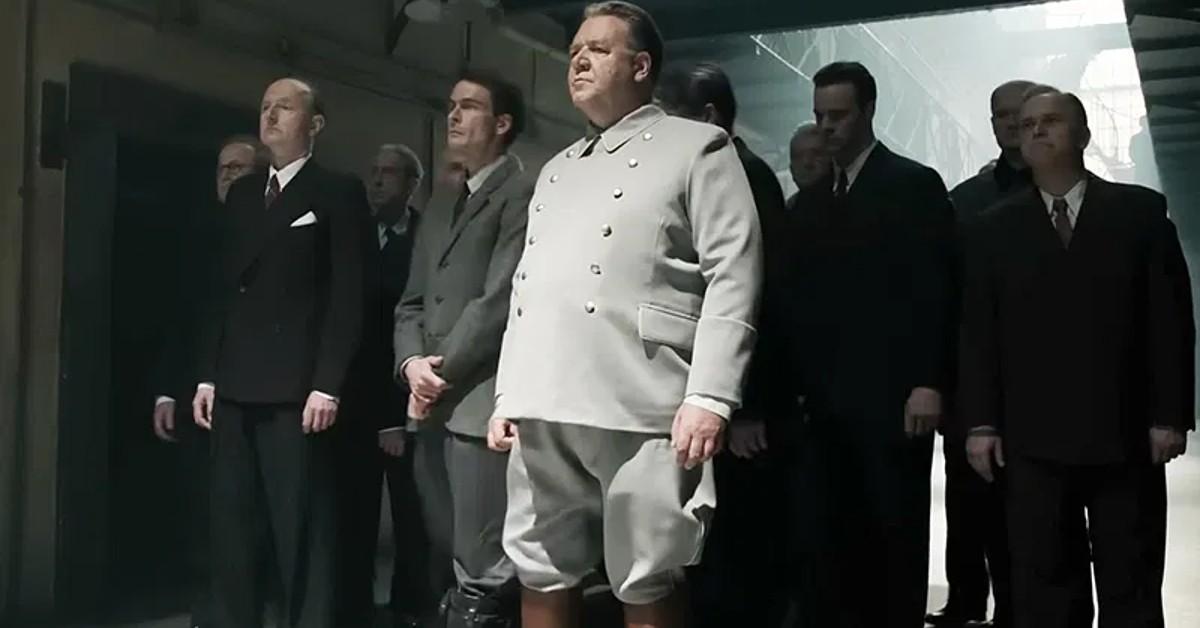
Hitler and his successor Joseph Goebbels killed themselves in Berlin.
- Russell Crowe Defends Stern Warning to Autograph Seekers in Viral Video: 'What's Your Problem?'
- Grim Secrets Behind Steve Irwin's Stingray Death as Fans Gear Up to Mark the 20th Anniversary of Crocodile Hunter's Passing
- Keith Urban Filled With Regret and Jealousy Over Nicole Kidman Split as She's Linked to a String of Young Hollywood Hunks
Want OK! each day? Sign up here!
Hitler and his successor Joseph Goebbels had killed themselves in Berlin, while Heinrich Himmler took his own life in British custody. Others, including Josef Mengele, escaped. But Goering, Rudolf Hess and Joachim von Ribbentrop were captured, and the Allies debated how far responsibility extended. Naval leader Karl Donitz and military commander Wilhelm Keitel were initially considered marginal, with some British officials noting they were only following orders. Yet their authority over those orders placed them among the defendants.
Prosecutors faced the challenge of defining atrocities that had never been codified. Lawrence added: "We didn't even have the term genocide until shortly before the trial started. It was the first time it was introduced into a legal case."
Polish lawyer Raphael Lemkin described genocide as the destruction of a nation or of an ethnic group, but the tribunal ultimately settled on four charges, including waging aggressive war and committing crimes against humanity.
Lawrence said: "It was the first time anyone tried to do this. They did it as well as they could and it created a precedent for that type of legal operation."
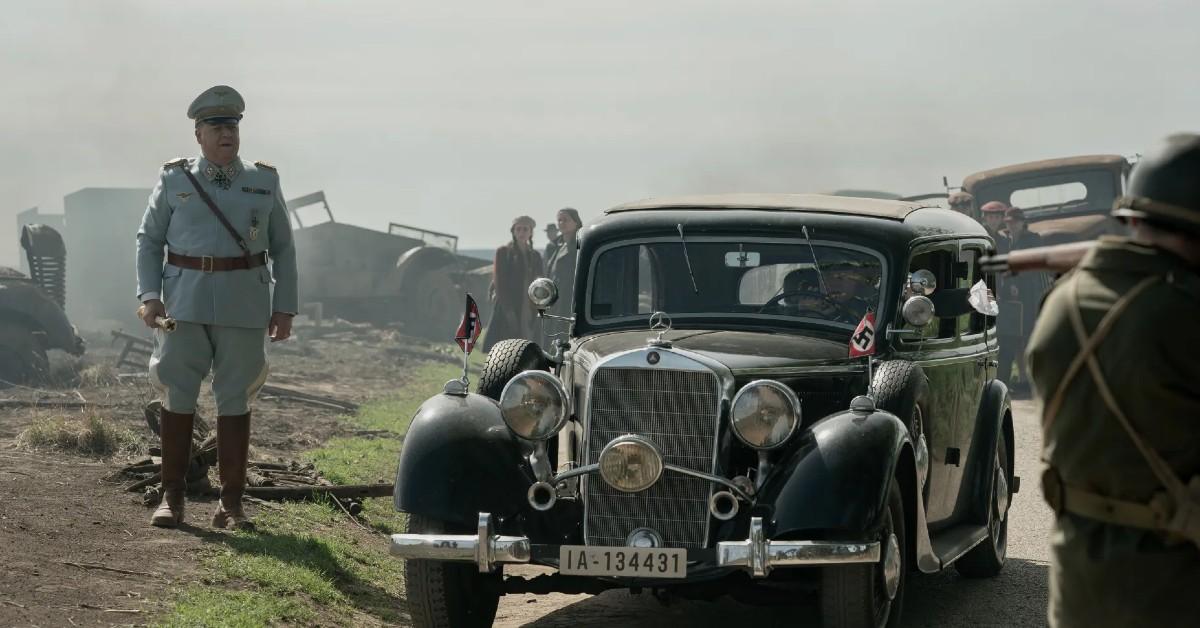
Germany surrendered in May 1945.
"My grandfather knew that the whole enterprise was legally questionable because the crimes that the defendants were accused of didn't exist in any statute book. They were invented retrospectively. That was a problem which he recognized; however, something had to happen to them."
Lawrence's grandfather insisted on procedural fairness despite pressure from Moscow, where Soviet authorities expected death sentences. At the same time, defendants frequently mocked the proceedings. Hess feigned amnesia, and Goering laughed during a screening of camp footage.
Crowe said: "I think, at a certain point, he managed to convince himself that he might get away with it all if his performance in court was strong enough. It was the size of his ego that made him say, 'I can still turn this around.'"
A huge turning point came when British prosecutor Sir David Maxwell-Fyfe painstakingly extracted evidence proving Goering's knowledge of illegal killings of Allied prisoners. The court was shown the film taken by Allied military photographers during the liberation of the Nazi extermination camps, featuring towering piles of skeletons, the innards of gas chambers and starving bodies of survivors. There were also accounts of prisoners of war being killed by being shoved off 100-foot cliffs or being forced to stand naked in freezing temperatures for two days.
Lawrence said: "Maxwell-Fyfe cross-examined Goering in a very sort of plodding English way on the documents just to prove that Goering had known about the order to murder escaped prisoners of war which was against international law and slowly proved that Goering knew a lot more than he was prepared to let on. Goering got cross, he got bothered, he started lying and that was an important moment because it had looked as if Goering was going to get away with things, which would have been very bad."
In the end, all but three of the 24 defendants were found guilty. Goering was sentenced to hang.
But he but defied the Allies one last time by ending his life with a cyanide pill.
Lawrence said: "I think people eventually understood that within the limitations of this extraordinary process it was done as fairly as it could be. To try and deal fairly with your enemies is maybe a virtue that is dying out, I fear, but it's an important virtue and the trial went a long way towards establishing that principle."