 NEWS
NEWSWhite House Debunks AI Image of Donald Trump and Natalie Harp: 'Clearly a Fake Photo'

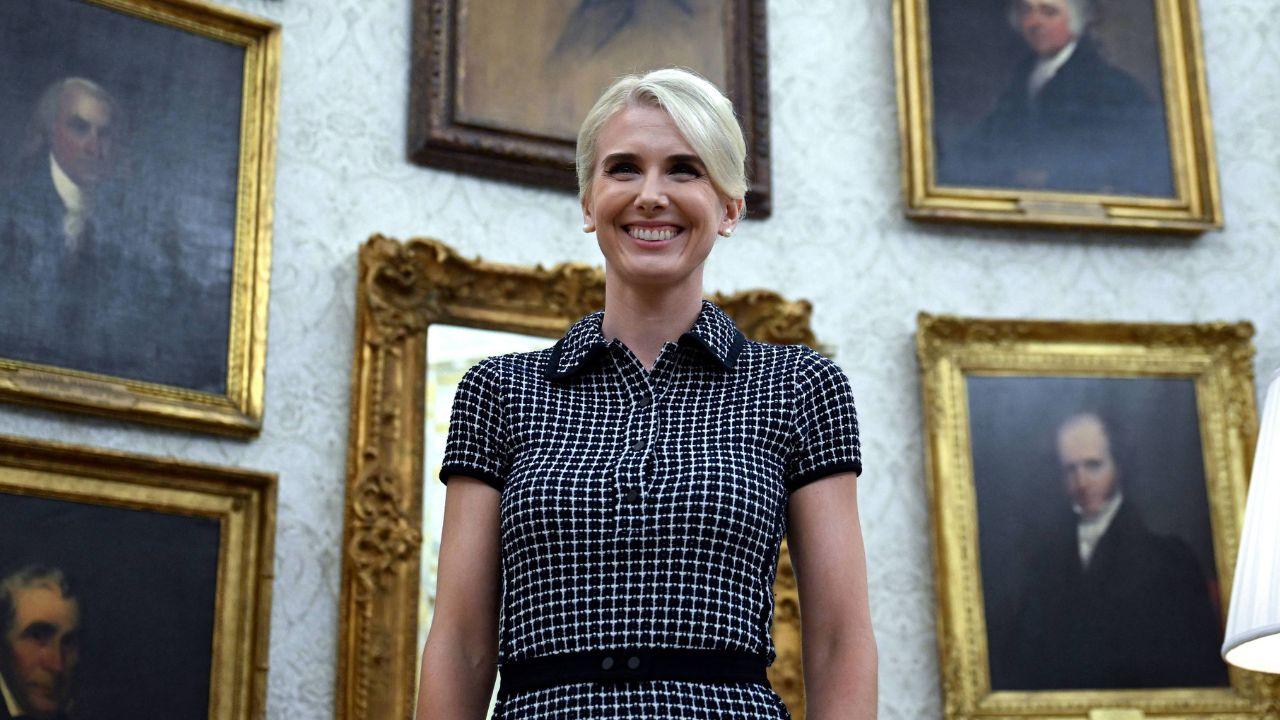
The White House denied that a viral image of Donald Trump and Natalie Harp is authentic.

Sept. 20 2026, Published 6:44 a.m. ET


The White House has denied the authenticity of viral images purporting to show President Donald Trump kissing a blonde woman presumed to be his aide Natalie Harp on a golf course.
“This is clearly a fake photo,” a White House official told The Daily Beast.
The clearest version of the image circulating online contained recognizable AI indicators, including six fingers on the woman’s right hand. Snopes also detected a watermark identifying it as generated with OpenAI tools. A blurrier copy lacked the watermark and did not retain enough detail to expose the same anomalies.
Why Looking Closely Is Not Enough
Experts warn that visual inspection alone is not enough to verify digital images.
Hany Farid, PhD, co-founder and chief science officer at GetReal Security, warned against relying on personal observation.
“The overwhelming evidence is that the average user cannot reliably distinguish real from fake content,” Farid said, citing experiments involving AI-generated voices, images and videos. “So, my first piece of advice is don’t try to be an armchair forensic analyst.”
He also warned that social media is where fake content proliferates.
“Social media is simply not a reliable source of news and information,” he said. “If you are unsure about what you are seeing, return to trusted sources that — unlike social media — have robust mechanisms for vetting authenticity.”
Verifying Content Yourself
- The Growing Race to Detect Deepfakes: How Tools Like TruthScan Are Helping People Tell Real From Fake
- White House 'Meme Account' Strategy Faces Growing Backlash After AI 'Rick and Morty' Video
- Seth Meyers Trolls Donald Trump's Excessive Praising of Xi Jinping: 'Not Even Chinese Citizens Gush This Much About Him'
Want OK! each day? Sign up here!
Verification tools from major technology companies offer additional ways to check AI-generated content.
Mitch Chaiet, founder of Experiential Technologies, pointed to publicly available verification tools people can use to identify generated content, including those from OpenAI, Google, and ElevenLabs.
“AI images and video can be generated initially using numerous online services, many of which offer verification tools to identify watermarks and fingerprints embedded within the media they generate,” he explained.
Chaiet noted the same applies to camera-captured images and video that have been uploaded and edited with AI tools to create “non-genuine” copies.
Provenance Tools Can Add Evidence
Chaiet also pointed to Content Credentials from the Coalition for Content Provenance and Authenticity, or C2PA, which can document a file’s history.
“Organizations like C2PA offer resources and technologies like Content Credentials which organizations can adopt to help verify the ‘authenticity’ of content,” he explained.
The Fact Check Often Arrives Late
Content Credentials provided another method for examining a file’s history and authenticity.
GetReal fields daily authenticity questions from social platforms, news organizations and fact-checkers, Farid said, but suspicious material frequently spreads before specialists become involved.
“More often than not, we are looped in after content has already achieved escape velocity or is close,” he said. “There is, therefore, almost always a gap between the spread of lies on social media and fact checks from reliable sources.”