
 Politics
Viral Trump 'Secret Service Fight' Clip Debunked After Misidentified Man Gets Accused of Breaking Protocol

A viral video falsely showed Donald Trump arguing with a Secret Service agent.

Oct. 3 2026, Published 9:58 a.m. ET


A viral video claiming President Donald Trump had a “big fight” with a Secret Service agent after breaking protocol falsely identified both the person and the interaction.
The footage was recorded at the Presidents Cup golf tournament on September 27 and shows Trump speaking with PGA Tour CEO Brian Rolapp, not confronting a member of his protective detail.

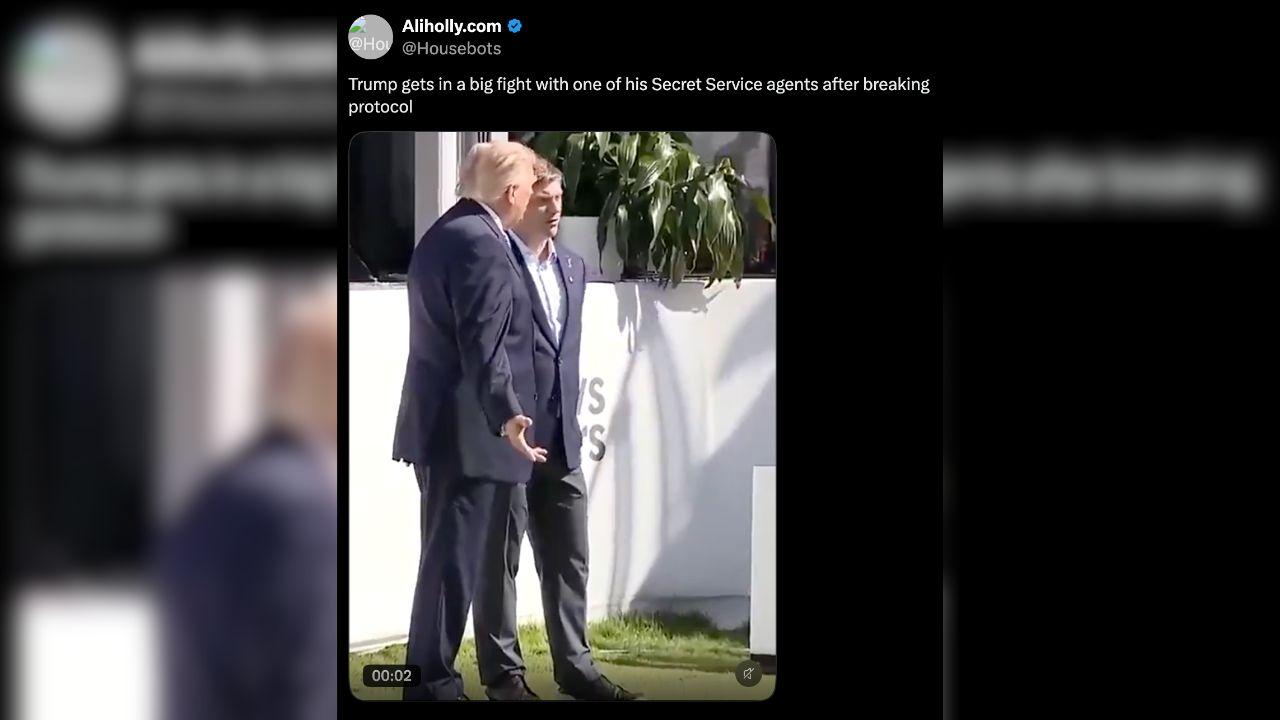
An archived post preserved the inaccurate claim after the original was deleted.
The false claim appeared in a September 27 post from the @Housebots account on X, which has since been deleted, though an archived version remains online.
What the Video Actually Shows
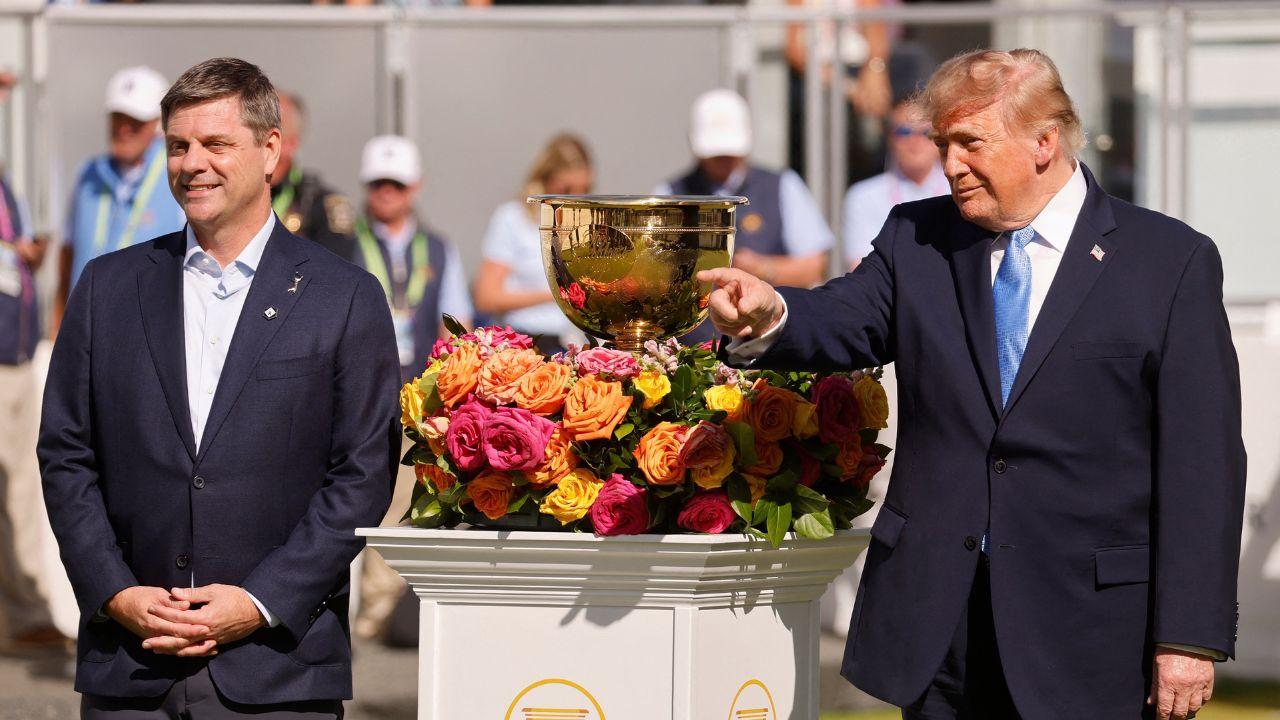
The footage actually showed Donald Trump speaking with PGA Tour CEO Brian Rolapp.
The post supplied viewers with a dramatic interpretation of the interaction: “Trump gets in a big fight with one of his Secret Service agents after breaking protocol.”
The other man was identified as Rolapp, however, and there have been no news reports supporting the claim that Trump fought with Secret Service personnel, which would certainly generate coverage if it were true.
The clip nevertheless provided enough visual ambiguity for the inaccurate caption to circulate.
- Donald Trump Lashes Out at Reporter Asking About Ballroom Costs: 'You Dumb Person'
- Donald Trump Brushes Off Question About Racist Obamas Post, Claims the Video 'Was a Very Strong Piece on Voter Fraud'
- Donald Trump Mocks Heckler During Speech About Transgender Athletes at New York Rally: 'Take Him Home to Mommy'
Want OK! each day? Sign up here!
Why the False Story Felt Believable
Political partisanship was cited as a factor in the spread of misinformation.
“Political partisanship is one of the biggest causes of the spread of misinformation on the internet,” said Andrew Selepak, PhD, program coordinator for the Master of Arts in Mass Communication’s Social Media program at the University of Florida College of Journalism and Communications.
“People come to believe misinformation, not because of the evidence presented, but because they want to believe it is true as it fits their political narrative,” he explained.
The misleading caption shaped how viewers interpreted the unclear interaction.
In that environment, the caption can shape how viewers interpret an otherwise unclear interaction. Rather than first determining who appears in the footage, users may assess whether the allegation feels consistent with what they already believe.
“For those who do not like President Trump, it is easy for them to believe that he would argue with the Secret Service or be combative with the people sworn to protect him,” Selepak said. “The same people believe he would not do what is in the interest of the American people who he swore to protect with his oath of office.”