
 Politics
Donald Trump Refuses to Say What He Uses AI for in Awkward Interview: Watch

'I don't want to tell you that,' the president said when asked what he uses AI for.
Sept. 14 2026, Updated 1:36 p.m. ET


President Donald Trump confirmed he personally uses artificial intelligence (AI) but directly refused to tell reporters what he uses it for during a press gaggle aboard Air Force One.
The brief, evasive exchange occurred on a flight returning from Ireland. When a reporter asked if he ever used the technology himself, Trump responded, "Yeah, I use AI." When pressed on how he utilizes it, he kept his response vague, stating, "You can use AI for a lot of things."
After the reporter asked a third time for specific examples of what he uses it for, Trump shut down the query entirely, saying, "Oh, I don't want to tell you that."
Inside Donald Trump's AI Use

Donald Trump refused to reveal what he uses AI for.
During the same interaction, Trump dismissed ongoing warnings from top tech executives and developers regarding the severe existential risks of unregulated AI. He insisted the technology will ultimately be "more good than bad — but by a lot."
Rather than detailing his personal use, Trump pivoted to global tech competition, asserting that the United States is currently beating all other nations — specifically China — in the race to develop AI.
Critics and independent outlets quickly pointed out the oddity of his vague answers. They noted that while Trump's personal social media accounts frequently share AI-generated images, he has previously admitted he doesn't use popular consumer tools like ChatGPT, once saying an industry insider used it to rewrite a speech for him.
Trump has frequently and publicly utilized AI-generated imagery and deepfake videos as primary tools for political messaging, attacking rivals and self-aggrandizement.
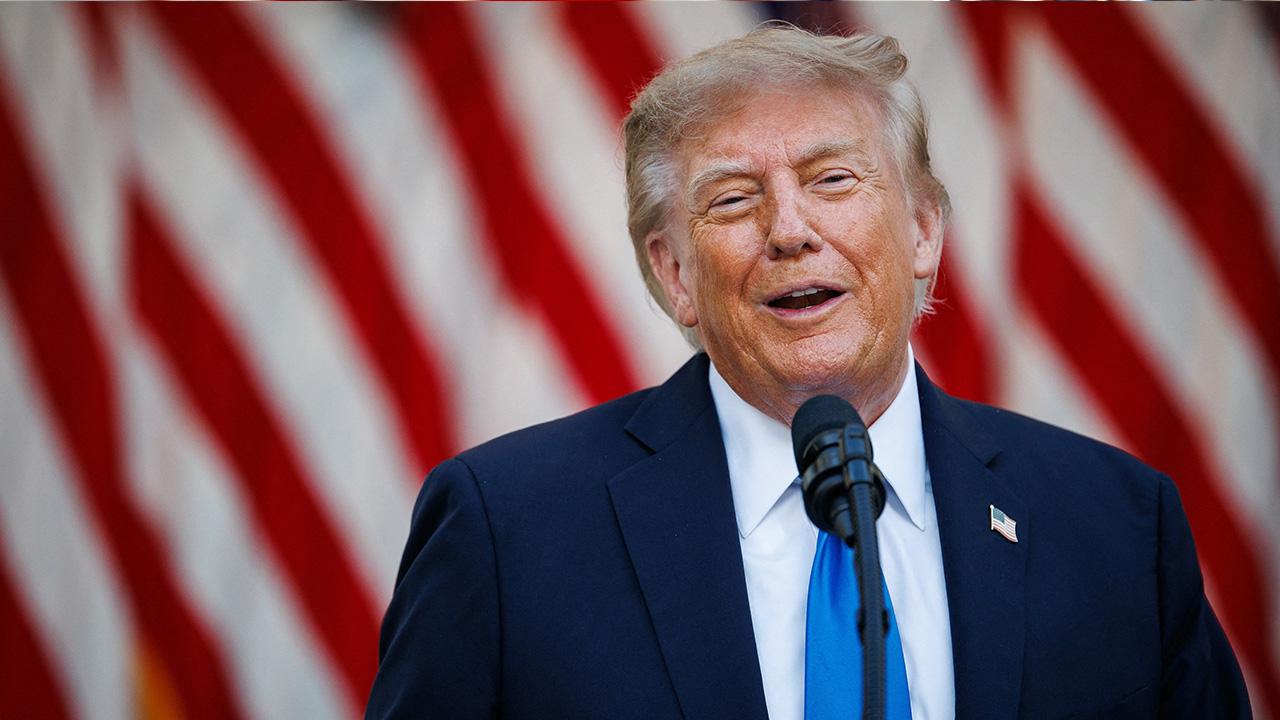
The POTUS is known for posting AI-made content on his Truth Social post.
Since late 2022, Trump has shared over 100 AI-generated images and videos on Truth Social, primarily through massive, concentrated posting sprees.
Trump regularly posts stylized AI-generated images that depict him in epic, historic or fictional scenarios, including images of himself riding a horse alongside George Washington, depictions of himself as the superhero Green Lantern building a border wall, a Hulk Hogan-style pro wrestler, and most ignominiously, a highly controversial AI image depicting himself as Jesus, which he later deleted following backlash from religious groups.
“He's used AI to mock Jesus. That should have been an easy answer,” quipped one prominent Trump critic on X after the president refused to elaborate on his AI usage.
Want OK! each day? Sign up here!
The President's AI Posts Have Sparked Controversy
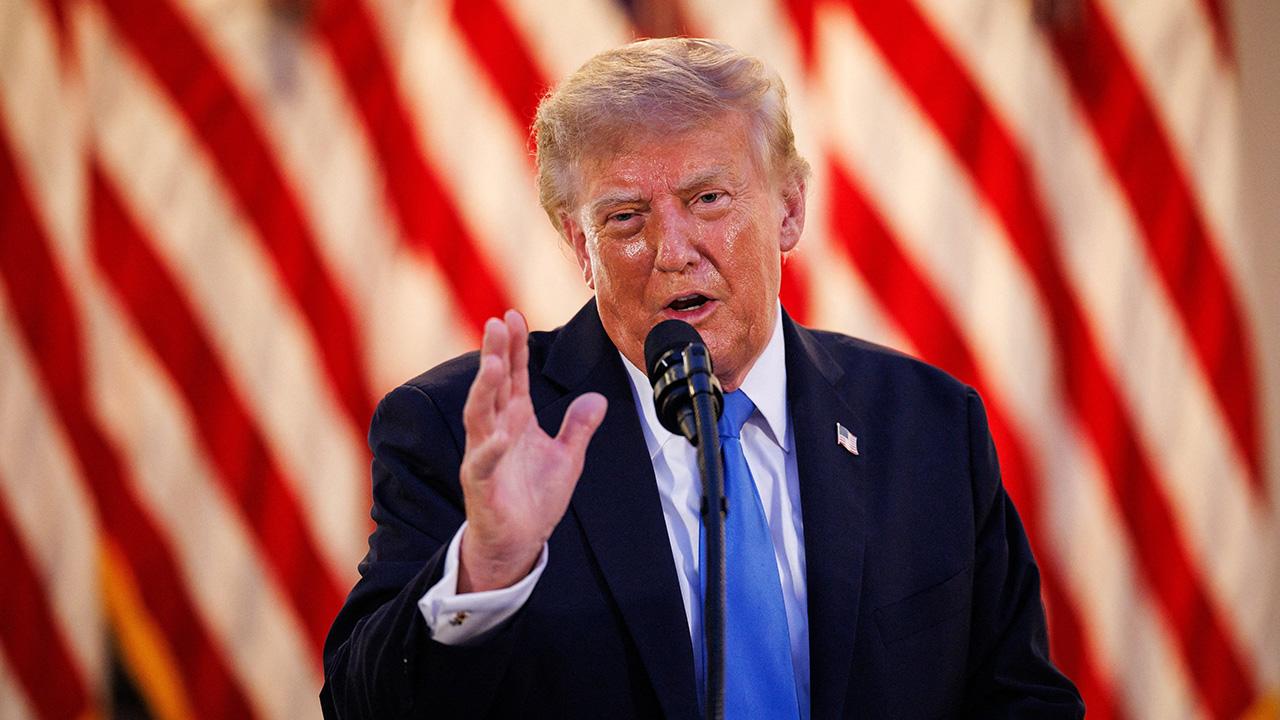
The POTUS believes AI will do 'more good than bad' despite experts insisting otherwise.
Trump has increasingly weaponized generative AI to simulate military actions and international dominance.
He has used AI-generated videos depicting fake American military strikes on Iranian infrastructure and warships. The administration defended them, saying they were meant to "send a message" to foreign adversaries.
He has also shared graphic designs asserting U.S. control over landmarks, including labeling the Strait of Hormuz and the Moon as new U.S. territories.
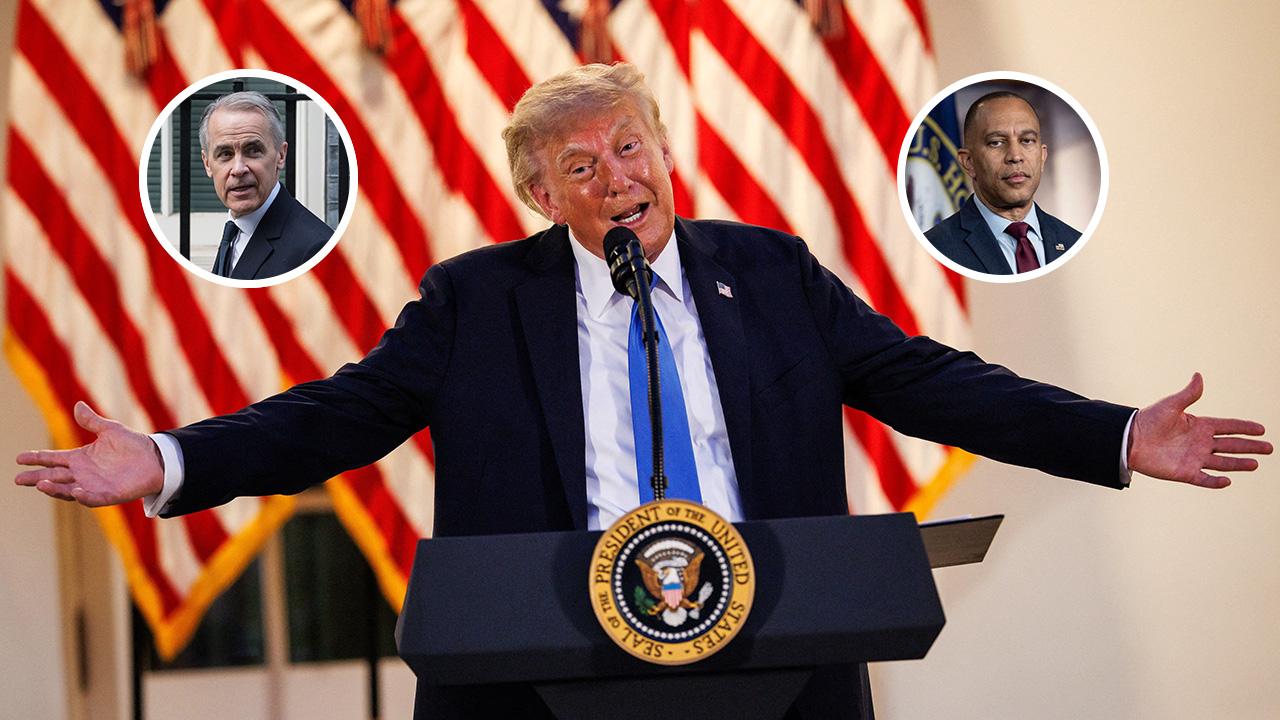
The president poked fun at Mark Carney and Hakeem Jeffries in AI-generated posts.
Recently, he shared an AI-generated image portraying himself in a U.S. hockey uniform physically threatening Canadian Prime Minister Mark Carney.
Trump frequently uses deepfakes and AI voice or image generation to tease opponents, sharing AI-generated videos mocking Democratic leaders Hakeem Jeffries and Chuck Schumer, including a racially insensitive depiction of Jeffries in a sombrero and mustache.
He also posted (and later deleted) an AI-generated deepfake video of himself promoting a QAnon-linked medical conspiracy theory about secret, cure-all "med beds" being hidden from the public.
Last week, he posted an AI-generated video that "re-imagined" the state of New Mexico, renaming it "New America," which drew heavy criticism from local historians and residents.